Home
Videos
Steve McCurry – Profile
Resource Center: Non-Photographic Diversions
Outreach Program
Natalie Fobes – Profile
Nacho Corbella Video Page
Media Archive
Foundry 2011 – Buenos Aires
LEARN
SEE
NETWORK
REFERENCE
NAV MENU
Organization
Legacy
FOUNDRY
PWAU
Outreach
Interviews
Ideas around images
HOME
About Us
Outreach Program
Videos
Resource Center
Search for:
Search Button
Home
»
»
Whitney Johnson
Whitney Johnson
←
Return to People Index
PhotoWings Media Archive
Share
Featured
51:28
A Conversation on Widowhood
Whitney Johnson
Director of Visual and Immersive Experiences, National Geographic
Projects · appears in 2
Photoville
Collection
The Alexia Foundation
Collection
Tags
Concepts
Collaboration
3
Context
3
Storytelling
3
Legacy
2
Topics
Documentary Photography
3
Photojournalism
2
Visual Storytelling
2
War Photography
2
Collaboration & Partnership
1
Human Rights Photography
1
India
1
New York
1
Photography Awards
1
Portfolio
4 videos · every appearance
3:01
Editor's Compilation: Photo Editors on Editing
Award-winning and expert photo editors MaryAnne Golon (Washington Post), Whitney Johnson (National Geographic), Mike Davis (Syracuse University), and Olivier Laurent (Washington Post) discuss how they fit into the behind-the-scenes photo publication process, describing the work analyzing, selecting, and arranging the images that appear in print out of the hundreds or thousands they see initially. MaryAnne Golon was the Director of Photography at The Washington Post. Before joining The Post in 2012, MaryAnne was the director of photography at Time Magazine and a senior photography editor there for more than 20 years. Before joining The Post in 2012, MaryAnne curated Look 3: The Festival of the Photograph and help guide the 2-year product build of a digital asset management system for a major non-profit organization. Golon was also director of photography at Time magazine where she co-managed the international newsweekly’s photography department for more than 15 years. Golon has received many individual and team picture-editing awards from the POYi (Pictures of the Year International) and NPPA's (National Press Photographer’s Association) Best of Photojournalism competitions. She was awarded Picture of the Editor of the Year from the IFA Lucie Awards in 2013. She was twice selected for American Photo magazine’s list of the 100 most important people in photography. Whitney Johnson was the director of visuals and immersive experiences at National Geographic where she led the visual and immersive staffs, overseeing photography, video, Instagram, and podcast teams. She joined National Geographic in 2015 as the magazine’s deputy director of photography. From 2007 to 2015, Johnson was on the staff of The New Yorker, first as a picture editor and later as the Director of Photography. Prior to joining the magazine, Johnson worked at the Open Society Foundations, where she was a founding member of the Documentary Photography Project and managed an international grant competition and exhibition for documentary photographers. In 2011, Johnson — together with The New Yorker staff photographer Platon and Human Rights Watch — received a Peabody. In 2018, Pictures of the Year International honored the National Geographic photo staff with the Angus McDougall Overall Excellence in Editing Award and recognized Johnson with an Award of Excellence in the Magazine Visual Editor of the Year category. In 2019, National Geographic was a finalist for the Pulitzer Prize for Feature Photography. Mike Davis was the endowed Alexia Tsairis Chair for Documentary Photography and a Professor of Practice of Visual Communications in the S.I. Newhouse School of Public Communications at Syracuse University. Davis taught visual storytelling classes and ran the Alexia Grant competitions at the school. The Alexia is one of the world’s premiere grants that support humanistic, socially significant visual projects for professionals and students. In addition to teaching and the Alexia, Davis now works as an independent photography editor, working with visual storytellers around the world to elevate their way of seeing and editing their projects for books, gallery exhibitions, portfolios and contest and grant submissions. He has worked on more than 500 such projects, which in turn inform and elevate his teaching and the Alexia. He also continues to consult with a range of organizations, publications and competitions internationally. For 30 years before arriving at Newhouse, Davis held visual leadership positions at National Geographic, the White House and several of America’s leading newspapers, as well as running his own consulting business. He was twice named Newspaper Picture Editor of the Year and has edited the work of several photographers who went on to win Photographer of the Year titles and others whose work was widely recognized at the top tiers of the profession. Olivier Laurent is a foreign photo editor at The Washington Post, working with the organization's network of 27 reporters based in 19 foreign locations to offer a comprehensive international report, with a special focus on Africa, Asia and the Middle-East. He also partners with the Post's social team on photo-driven initiatives and contributes to InSight, the Post’s photography section. In 2020, he was part of the climate team that won the Pulitzer Prize in Explanatory Reporting for the 2ºC: Beyond the Limit series, which "showed with scientific clarity the dire effects of extreme temperatures on the planet." In 2018, he coordinated the newspaper's visual coverage of the humanitarian crisis in Yemen, working with Lorenzo Tugnoli, a contract photographer with the Post. The photo essay won the 2019 Pulitzer Prize in Feature Photography as well as a World Press Photo. He joined the Post from TIME where he was the Editor of LightBox, the magazine’s photography website.
PhotoWings
3:58
Editor's Compilation: Working With Photographers
To most audiences, and even some photographers, the work of professional photo editors can be a mysterious component of the photography and publishing industries. In this video, we hear from esteemed photo editors MaryAnne Golon (Washington Post), Whitney Johnson (National Geographic), Kathy Moran (National Geographic), Mike Davis (Syracuse University), and Olivier Laurent (Washington Post). Each gives us fascinating insights into what a photo editor does and how they approach their work, and in particular how editors collaborate with photographers. MaryAnne Golon is the Director of Photography at The Washington Post. Before joining The Post in 2012, MaryAnne was the director of photography at Time Magazine and a senior photography editor there for more than 20 years. Before joining The Post in 2012, MaryAnne curated Look 3: The Festival of the Photograph and help guide the 2-year product build of a digital asset management system for a major non-profit organization. Golon was also director of photography at Time magazine where she co-managed the international newsweekly’s photography department for more than 15 years. Golon has received many individual and team picture-editing awards from the POYi (Pictures of the Year International) and NPPA's (National Press Photographer’s Association) Best of Photojournalism competitions. Whitney Johnson is the director of visuals and immersive experiences at National Geographic. She leads the visual and immersive staffs, overseeing photography, video, Instagram, and podcast teams. She joined National Geographic in 2015 as the magazine’s deputy director of photography. From 2007 to 2015, Johnson was on the staff of The New Yorker, first as a picture editor and later as the director of photography. Prior to joining the magazine, Johnson worked at the Open Society Foundations, where she was a founding member of the Documentary Photography Project and managed an international grant competition and exhibition for documentary photographers. Kathy Moran is National Geographic magazine’s Deputy Director of Photography. As the magazine’s first senior editor for natural history projects, Moran has been producing projects about terrestrial and underwater ecosystems for the magazine since 1990. At last count she has edited over 350 stories for the magazine. Moran has edited several books for the Society. She was named “Picture Editor of the Year” for her winning portfolios in the 2017 and 2006 POYi competition and the 2011 Best of Photo competition. She is a founding member of the International League of Conservation Photographers and has served on the Executive Committee. She has edited numerous books for ILCP photographers published with the University of Chicago Press. Mike Davis is the endowed Alexia Tsairis Chair for Documentary Photography and a professor of practice of visual communications in the S.I. Newhouse School of Public Communications at Syracuse University. Davis teaches visual storytelling classes and runs the Alexia Grant competitions at the school. In addition to teaching and the Alexia, Davis continues to work as an independent photography editor, working with visual storytellers around the world to elevate their way of seeing and editing their projects for books, gallery exhibitions, portfolios and contest and grant submissions. He also continues to consult with a range of organizations, publications and competitions internationally. For 30 years before arriving at Newhouse, Davis held visual leadership positions at National Geographic, the White House and several of America’s leading newspapers, as well as running his own consulting business. He was twice named newspaper picture editor of the year and has edited the work of several photographers who went on to win Photographer of the Year titles and others whose work was widely recognized at the top tiers of the profession. Olivier Laurent is a foreign photo editor at The Washington Post, working with the organization's network of 27 reporters based in 19 foreign locations to offer a comprehensive international report, with a special focus on Africa, Asia and the Middle-East. He also partners with the Post's social team on photo-driven initiatives and contributes to InSight, the Post’s photography section. In 2020, he was part of the climate team that won the Pulitzer Prize in Explanatory Reporting for the 2ºC: Beyond the Limit series, which "showed with scientific clarity the dire effects of extreme temperatures on the planet." In 2018, he coordinated the newspaper's visual coverage of the humanitarian crisis in Yemen, working with Lorenzo Tugnoli, a contract photographer with the Post. The photo essay won the 2019 Pulitzer Prize in Feature Photography as well as a World Press Photo. He joined the Post from TIME where he was the Editor of LightBox, the magazine’s photography website.
PhotoWings
51:28
A Conversation on Widowhood
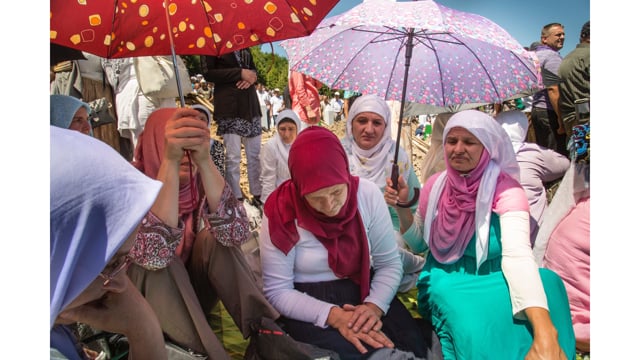
Presented in partnership with the Pulitzer Center Sunday, Sept 17 2017 Featuring: Amy Toensing and Whitney Johnson In many regions of the world widowhood marks a “social death” for a woman – casting her and her children out to the margins of society. Photojournalist Amy Toensing and National Geographic’s Deputy Director of Photography, Whitney Johnson, discuss the project, A Life After Loss, that looks at the status of widows In Uganda, Bosnia, and India. BIOS Whitney Johnson is the deputy director of photography at National Geographic. Prior to joining the magazine, she was the director of photography at The New Yorker. She’s been a champion of documentary photographers since she began her career at the Open Society Foundations, nearly 15 years ago. Amy Toensing, an American photojournalist committed to telling stories with sensitivity and depth, is known for her intimate essays about the lives of ordinary people.Toensing has been a regular contributor to National Geographic magazine for nearly two decades and recently completed her fifteenth feature story for the publication. She has covered cultures around the world including the last cave dwelling tribe of Papua New Guinea, Aboriginal Australia, the Maori of New Zealand and the Kingdom of Tonga.Amy began her professional career in 1994 as a staff photographer at her hometown paper, The Valley News, in New Hampshire. She then worked for The New York Times, Washington D.C. bureau covering the White House and Capitol Hill during the Clinton administration. In 1998, Toensing left D.C. to receive her Master’s Degree from the School of Visual Communication at Ohio University.Toensing was named the recipient of the 2018 Mike Wallace Fellowship in Investigative Reporting at the University of Michigan where she will study the impact of women’s movements globally and documentary film production. Her work on widows, published in the February, 2017 issue of National Geographic magazine, will be exhibited at the 2017 Visa Pour L’image.
PhotoWings
2:59
Whitney Johnson on Storytelling
PhotoWings
No videos match your search.
Collection
Photoville
View project
See all 174
3:16
Laura Roumanos on Starting Photoville
Photoville
1:57
Photoville 2min Video
Photoville
8:17
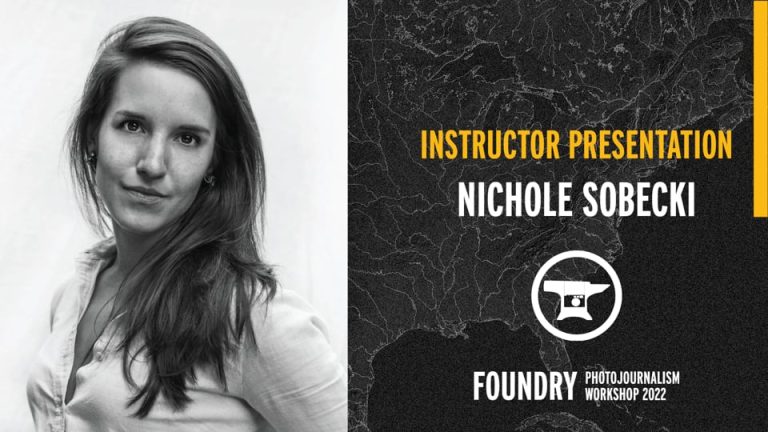
Nichole Sobecki Presentation: Foundry 2022
Photoville
3:42
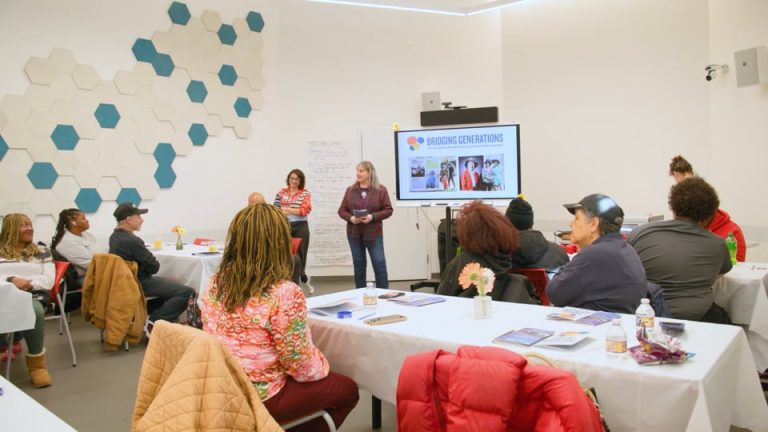
Bridging Generations: An Intergenerational Learning and Storytelling Project
Photoville
Collection
The Alexia Foundation
View project
See all 1
7:16
The Alexia Foundation
The Alexia Foundation
Legal
Privacy Policy
/
Terms of Use
Home
✕
✕
All
Resource Center
✕
✕
✕
 Featured
51:28
Featured
51:28