Home
Videos
Steve McCurry – Profile
Resource Center: Non-Photographic Diversions
Outreach Program
Natalie Fobes – Profile
Nacho Corbella Video Page
Media Archive
Foundry 2011 – Buenos Aires
LEARN
SEE
NETWORK
REFERENCE
NAV MENU
Organization
Legacy
FOUNDRY
PWAU
Outreach
Interviews
Ideas around images
HOME
About Us
Outreach Program
Videos
Resource Center
Search for:
Search Button
Home
»
»
Sarah Waiswa
Sarah Waiswa
←
Return to People Index
PhotoWings Media Archive
Share
Featured
1:24:07
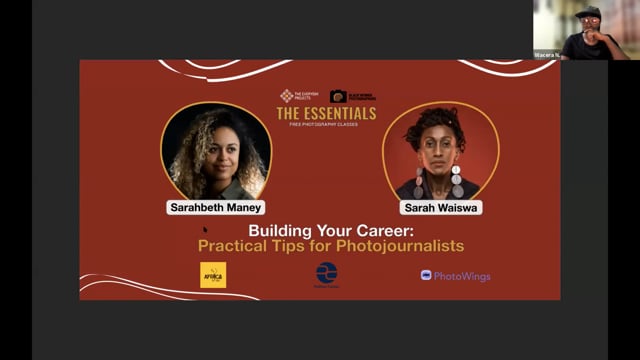
“Building Your Career” with Sarahbeth Maney and Sarah Waiswa
Sarah Waiswa
Documentary and Portrait Photographer
Projects · appears in 3
The Everyday Projects
Collection
The Essentials
Collection
Foundry Photojournalism Workshop
Collection
Tags
Concepts
Storytelling
3
Collaboration
2
Context
2
Inspiration
2
Legacy
2
Perspective
2
Reflection
2
Self-Discovery
2
Resilience
1
Trust
1
Topics
Documentary Photography
3
Photojournalism
3
Portrait Photography
3
War Photography
3
Africa
2
Archiving & Preservation
1
Arles
1
Black Women Photographers
1
Caption Writing
1
Career Development
1
Climate Crisis & Environment
1
Collaborative & Community Photography
1
Congo & Central Africa
1
Democracy & Politics
1
Education & Youth
1
Family Albums & Vernacular Photography
1
Gender & Sexuality
1
Grant Writing & Funding
1
Health & Medicine
1
Mexico
1
New York
1
Photo Archive
1
Photo Business & Licensing
1
Photo Education Programs
1
Photographer Safety & Security
1
Photography Awards
1
Photography Book
1
Photography Grant
1
Photography Workshop
1
Picture Editing
1
Poverty & Economic Inequality
1
Racial Justice & Anti-Racism
1
Social Media & Photography
1
Sub-Saharan Africa
1
Visual Heritage & Memory
1
Visual Narrative
1
+26 more
Portfolio
3 videos · every appearance
1:24:07
“Building Your Career” with Sarahbeth Maney and Sarah Waiswa
Careers in photography have no roadmap, and a common question is, how do I get started? How do I make my first contacts in the industry, get my first assignment, work on my first projects? Photographers Sarahbeth Maney and Sarah Waiswa will use their own passion projects and reporting projects to walk you through the start of their careers and highlight some of their most important learnings along the way. Coming from different points of their career and different backgrounds, Sarabeth and Sarah will showcase what they were able to do with limited support and discuss what it was truly like to get their careers off the ground. Sarahbeth Maney is a 2021-22 photography fellow at The New York Times' Washington bureau. Her personal work focuses on topics related to housing insecurity, disability, and inequalities that disproportionately impact Black and brown communities. Most recently, she has documented immigration along the U.S.-Mexico border, the Black Lives Matter movement, and the California wildfire season. In addition, she filmed a short documentary following Ahmet Ustunel, the first blind person to kayak independently from Asia to Europe using navigational prototype technology. Maney graduated from San Francisco State University in 2019 with a degree in photojournalism and has interned at the San Francisco Chronicle and The Flint Journal in Michigan. She is a recipient of the inaugural Pulitzer Center and Diversify Photo Eyewitness Photojournalism Grant in 2020. Her photography has been published by TIME, Vanity Fair, Apple, The Washington Post, and the San Francisco Chronicle, among others. Maney is a member of Diversify Photo, the National Association of Black Journalists, Authority Collective, and Black Women Photographers. You can follow her @sbmaneyphoto. Sarah Waiswa is Ugandan-born, Kenya-based documentary and portrait photographer with an interest in exploring the New African Identity on the continent. With degrees in sociology and psychology, Sarah’s work explores social issues in Africa in a contemporary and non-traditional way. In 2015, she was awarded first place in the story and creative categories in the Uganda Press Photo Awards and second place in the Daily Life and portrait categories. In 2016 she was awarded the Discovery Award in Arles, France and in 2017 she was awarded the Gerald Kraak Award in Johannesburg, South Africa. In 2018, she was named a Canon Brand Ambassador and was selected for the World Press Photo 6x6 Africa Program. She is a Pulitzer Center Rainforest Journalism Fund grantee. Her work has been exhibited around the world, most recently at the National Gallery of Victoria in Australia. Her work is currently on display at the Bristol Photo Festival 2021 in collaboration with the Bristol Archives. Her photographs have been published in the Washington Post, Bloomberg, the New York Times, among other publications, and she has worked with brands such as Christian Dior and Chloe. Earlier this year, she founded African Women in Photography, a non profit organization dedicated to elevating and celebrating the work of women and non binary photographers from Africa. She is a contributing photographer to Everyday Africa. You can follow her @lafrohemien.
PhotoWings
1:24:07
“Building Your Career” with Sarahbeth Maney and Sarah Waiswa
Careers in photography have no roadmap, and a common question is, how do I get started? How do I make my first contacts in the industry, get my first assignment, work on my first projects? Photographers Sarahbeth Maney and Sarah Waiswa will use their own passion projects and reporting projects to walk you through the start of their careers and highlight some of their most important learnings along the way. Coming from different points of their career and different backgrounds, Sarabeth and Sarah will showcase what they were able to do with limited support and discuss what it was truly like to get their careers off the ground. Sarahbeth Maney is a 2021-22 photography fellow at The New York Times' Washington bureau. Her personal work focuses on topics related to housing insecurity, disability, and inequalities that disproportionately impact Black and brown communities. Most recently, she has documented immigration along the U.S.-Mexico border, the Black Lives Matter movement, and the California wildfire season. In addition, she filmed a short documentary following Ahmet Ustunel, the first blind person to kayak independently from Asia to Europe using navigational prototype technology. Maney graduated from San Francisco State University in 2019 with a degree in photojournalism and has interned at the San Francisco Chronicle and The Flint Journal in Michigan. She is a recipient of the inaugural Pulitzer Center and Diversify Photo Eyewitness Photojournalism Grant in 2020. Her photography has been published by TIME, Vanity Fair, Apple, The Washington Post, and the San Francisco Chronicle, among others. Maney is a member of Diversify Photo, the National Association of Black Journalists, Authority Collective, and Black Women Photographers. You can follow her @sbmaneyphoto. Sarah Waiswa is Ugandan-born, Kenya-based documentary and portrait photographer with an interest in exploring the New African Identity on the continent. With degrees in sociology and psychology, Sarah’s work explores social issues in Africa in a contemporary and non-traditional way. In 2015, she was awarded first place in the story and creative categories in the Uganda Press Photo Awards and second place in the Daily Life and portrait categories. In 2016 she was awarded the Discovery Award in Arles, France and in 2017 she was awarded the Gerald Kraak Award in Johannesburg, South Africa. In 2018, she was named a Canon Brand Ambassador and was selected for the World Press Photo 6x6 Africa Program. She is a Pulitzer Center Rainforest Journalism Fund grantee. Her work has been exhibited around the world, most recently at the National Gallery of Victoria in Australia. Her work is currently on display at the Bristol Photo Festival 2021 in collaboration with the Bristol Archives. Her photographs have been published in the Washington Post, Bloomberg, the New York Times, among other publications, and she has worked with brands such as Christian Dior and Chloe. Earlier this year, she founded African Women in Photography, a non profit organization dedicated to elevating and celebrating the work of women and non binary photographers from Africa. She is a contributing photographer to Everyday Africa. You can follow her @lafrohemien.
PhotoWings
18:19
Sarah Waiswa Foundry Presentation
Sarah Waiswa gives a presentation at the 2019 Foundry Photojournalism Workshop about her project documenting Kimbanguism, a Christian religious movement founded by Simon Kimbangu in the Belgian Congo in 1921, and another titled "African Cityzens," a project co-created with Joel Lukhovi that documents stories around public transport and national borders in Africa. The Foundry Photojournalism Workshop offers majority world students who could not otherwise afford it a chance to learn from some of the world's most well respected photojournalists and photography professionals. Sarah Waiswa is a Ugandan born Kenya-based freelance documentary and portrait photographer with an interest in exploring identity on the African continent, particularly the New African Identity. Her work focuses on changing the narrative on Africa by generating dialogue on developing issues through visual documentation. She is currently involved in a Trans African photographic journey, documenting daily city life in all 54 countries of Africa over a period of five years. After getting both her sociology and psychology degrees and working in a corporate position for a number of years, she decided to pursue photography full time. It was one of the hardest/easiest decisions she ever made. A storyteller, Sarah’s work focuses on identity and explores themes surrounding isolation and belonging. From the persecution of people with Albinism, to children practicing ballet in Kibera. In more recent work, in the long-term project Kimbanguism, Sarah explores the Kimbanguist faith as an afro Christian movement but one rooted in resistance against a colonial regime that imprisoned their black messiah for 30 years. Her portraiture project, "Stranger in a Familiar Land", explores the persecution of albinos in sub-Saharan Africa, in which they are hunted for the perceived magical powers of their body parts. The series sets an albino woman against a background of the Nairobian slums of Kibera, which represent the stormy outside world. The model's dreamlike pose in societal isolation reflects both the model's alienation and the photographer's hesitance towards her society. Waiswa developed the project to raise awareness after reading a newspaper article about treatment of albinos in Tanzania. Part of their shoot consisted of responding to the jeering throng. Aida Muluneh, the photographer who presented the award, described Waiswa's photography as reflecting her surroundings' complexities. While Sarah Moroz of i-D praised the clarity with which Waiswa presented the isolation of albino identity, as the model's lighthearted accessories defied an insurmountable air of rejection, Sean O'Hagan of The Guardian considered the otherwise "brave" effort "oddly overstaged". Waiswa's work explores what she calls a "New African Identity": how younger generations of Africans feel more expressive and less restrained by tradition than their predecessors. She also sought to counteract stereotypical depictions of Africa, often the result of foreign rather than native photographers. Additionally, many of her subjects are women. In 2016, Waiswa was working with photographer Joel Lukhovi on "African Cityzens", which records daily life in multiple African cities. They participated in a 2017 book that shows the Maasai people in truthful, quotidian context, rather than as stereotypical warriors. For Waiswa, the project consummated a search for information on a poorly documented ancient female deity.
PhotoWings
No videos match your search.
The Everyday Projects
Collection · Related
47:18
“Then & Now: Photographers Repicturing Their Archive in 2020” presented with Everyday Projects, HuffPost, and RYOT
THEN & NOW: PHOTOGRAPHERS REPICTURING THEIR ARCHIVE IN 2020 presented with Everyday Projects, HuffPost, and RYOT Featuring Sheila Pree Bright, Yolanda Escobar Jiménez, Brian Otieno, Xiaojie Ouyang, and moderated by Christy Havranek and Elie Gardner Photoville 2020 Talks On-demand recordings are made possible in partnership with PhotoWIngs with additional support by the Philip and Edith Leonian Foundation This year–amidst the compounded pandemics of COVID-19 and systemic racism, amidst global social upheaval–thirteen photographers returned to places and moments they have photographed before, to make new images and record the visual impact of 2020. Their photographs reveal evolutions in our interactions and traditions, how we use (or have stopped using) public spaces, inequality and unrest, economic strain, and demands for justice. Photographers Sheila Pree Bright (Atlanta, U.S.A.), Yolanda Escobar Jiménez (Quito, Ecuador), Brian Otieno (Nairobi, Kenya), and Xiaojie Ouyang (Wuhan, China), discuss what it was like to return to places they had photographed before and make new photographs. Moderated by Christy Havranek of HuffPost, and Elie Gardner of The Everyday Projects, they will discuss their findings, their photographs, why they chose those specific places, and what their photographs may tell us as we collectively look for a roadmap to our futures. photoville.nyc/online/then-now-photographers-repicturing-their-archive-2020/
The Everyday Projects
1:36:08
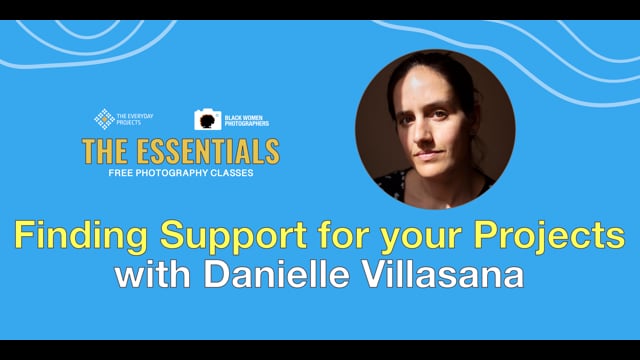
The Essentials: Finding Project Support with Danielle Villasana
Danielle Villasana will share tips on preparing grant applications for new or ongoing projects. She’ll cover the do’s and don'ts as well as various funding organizations within the visual media industry. This video is part of The Essentials, a series of online classes presented by The Everyday Projects and Black Women Photographers. You can find the whole series here: everydayprojects.org/webinars
The Everyday Projects
1:13:45
The Essentials: Building a Narrative with Kiana Hayeri
Kiana Hayeri is known for her visual storytelling that is intimate, personal, and lyrical. In this class, she will discuss how to build a narrative from start to finish, including how to pitch a story to an editor and how to break down a story while photographing on assignment. This video is part of The Essentials, a series of online classes presented by The Everyday Projects and Black Women Photographers. You can find the whole series here: everydayprojects.org/webinars
The Everyday Projects
1:23:58
The Essentials: Honing Your Skills with Nicky Woo
Nicky Quamina-Woo has a career as both a commercial and documentary photographer. In this class, she will touch on the basics of portraiture lighting, marketing your work, and tailoring your portfolio to fit the client. She reviews the portfolio of three students for the class to learn from, and shows examples of successful images, investigating why each works (or doesn’t) from a lighting perspective. This video is part of The Essentials, a series of online classes presented by The Everyday Projects and Black Women Photographers. You can find the whole series here: everydayprojects.org/webinars
The Everyday Projects
1:23:23
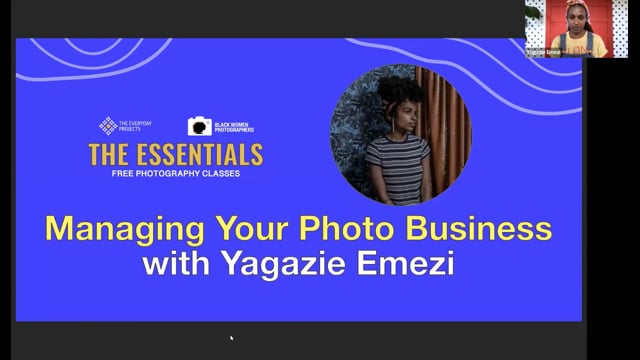
The Essentials: Be Your Own Manager with Yagazie Emezi
Yagazie Emezi will draw from her personal experiences of utilizing social media for self-promotion, managing finances as a freelancer, understanding contracts, and finding opportunities. She will speak to the challenges photographers regularly face, including setting a day rate and understanding usage and copyrights. Her session will be rooted in practical tools and strategies, and in understanding the overall value of one’s work. Yagazie Emezi is a Nigerian artist and self-taught photojournalist focused on stories surrounding African women and their health, sexuality, education and human rights. Having worked extensively across Africa, Yagazie also covers stories on identity and culture, social justice, climate change and migration. Her art practice uses photography and sculpture to construct visual critiques of Nigeria's socio-political state and the roles media play in it, pulling from history and current events. You can follow her @yagazieemezi.
The Everyday Projects
1:33:03
“Demystifying Digital Security: Practical Guidance for Journalists” with Ela Stapley
From surveillance to identity theft, journalists face a range of digital security threats as they go about their work. Knowing what steps to take to better protect themselves and their sources is more and more important. From secure communications to protecting online data, this session will teach journalists practical tips that they can use to increase their security. If you have doubts about WhatsApp security or have ever wondered if it is safe to store your passwords in your browser, then this session is for you! Ela Stapley is a digital safety expert and trainer working with journalists around the world to help them be safer both when online and when using technology. She is part of the Emergencies team at the Committee to Protect Journalists where she supports journalists on a wide range of issues ranging from device security to online harassment. Ela also leads the online harassment initiative at the International Women's Media Foundation where she works with journalists and other organisations to find solutions to violence online. Ela is a former freelance journalist and holds an MA in International Journalism from Cardiff University, UK.
The Everyday Projects
1:30:37
“So You Got An Assignment – Now What? Working with Photo Editors” with Jehan Jillani and Olivier Laurent
When on an assignment, knowing what an editor expects of you can be challenging, especially early on in your career. Photo editors Olivier Laurent (The Washington Post) and Jehan Jillani (The Atlantic) will take a practical approach to explaining the barebones of how to make photojournalism a sustainable career, and will delve into strategies on how to work with photo editors, how to make sure your voice is heard, and how to turn in photos with the proper information. Jehan Jillani is a Visuals Editor at The Atlantic where she commissions photography and illustrations for the publication’s digital features and special projects. She was previously the lead Picture and Visuals editor at the Guardian US. Jehan has also worked as a photo editor at National Geographic and The New Yorker. Her work has been recognized by the Society of Publication Designers and American Photography, and she has spoken about photography at numerous educational institutions. Jehan is a graduate of Smith College and is based in Brooklyn, NY. You can follow her @jehanjillani. Olivier Laurent is a foreign photo editor at The Washington Post, with a specific focus on Africa, Asia and the Middle-East. He also edits the Climate & Environment section, assigning photographers to cover the climate emergency. In 2019, he was part of the climate team that won the Pulitzer Prize in Explanatory Reporting for a series that "showed with scientific clarity the dire effects of extreme temperatures on the planet." In 2018, he coordinated the newspaper's visual coverage of the humanitarian crisis in Yemen, working with Lorenzo Tugnoli, a contract photographer with the Post. The photo essay won the 2019 Pulitzer Prize in Feature Photography. You can follow him @olivierclaurent.
The Everyday Projects
1:23:15
“Managing Risk, Safety, and Trauma as a Journalist” with Alison Baskerville and Tara Pixley
This session discusses key elements of risk assessment, safety and security planning, and the management of bio/psycho/social impacts in the work of journalists, understanding those experiences and the realities of the job through an intersectional lens. By recognizing how identity, environmental, organizational, and operational variables impact our health and safety for every assignment, we are better prepared to enter any space or experience. Tara Pixley (she/her) is a visual journalist and educator with 20 years of experience as a freelance photographer and photo editor for news organizations such as the New York Times, Newsweek, CNN, Wall Street Journal, ProPublica, and many others. She is currently an IWMF NextGen Fellow in journalist safety and risk assessment and a professor of journalism at Loyola Marymount University in Los Angeles. Tara was a Knight Visiting Fellow at Harvard’s Nieman Foundation of Journalism, an inaugural awardee of the World Press Photo Solutions Visual Journalism Initiative, and holds a Ph.D. in Communication from the University of California San Diego. You can follow her @tlpix. Ali Baskerville (she/her) is a documentary photographer and a media safety trainer and advisor with a focus on freelancers. A former-soldier-turned-photographer, Alison is able to blend her military experience with her career as a conflict photographer to translate into realistic safety training for the media community. As a photographer she uses her experience to comment on, document and question the military experience that aims to make work reflecting on important contemporary issues such as social inequality, military occupation, gender identity and safety as well as the long-term consequences of emotional trauma through conflict. You can follow her @ali_baskerville.
The Everyday Projects
See more ▾
The Essentials
Collection · Related
1:36:08
The Essentials: Finding Project Support with Danielle Villasana
Danielle Villasana will share tips on preparing grant applications for new or ongoing projects. She’ll cover the do’s and don'ts as well as various funding organizations within the visual media industry. This video is part of The Essentials, a series of online classes presented by The Everyday Projects and Black Women Photographers. You can find the whole series here: everydayprojects.org/webinars
The Essentials
1:13:45
The Essentials: Building a Narrative with Kiana Hayeri
Kiana Hayeri is known for her visual storytelling that is intimate, personal, and lyrical. In this class, she will discuss how to build a narrative from start to finish, including how to pitch a story to an editor and how to break down a story while photographing on assignment. This video is part of The Essentials, a series of online classes presented by The Everyday Projects and Black Women Photographers. You can find the whole series here: everydayprojects.org/webinars
The Essentials
1:23:58
The Essentials: Honing Your Skills with Nicky Woo
Nicky Quamina-Woo has a career as both a commercial and documentary photographer. In this class, she will touch on the basics of portraiture lighting, marketing your work, and tailoring your portfolio to fit the client. She reviews the portfolio of three students for the class to learn from, and shows examples of successful images, investigating why each works (or doesn’t) from a lighting perspective. This video is part of The Essentials, a series of online classes presented by The Everyday Projects and Black Women Photographers. You can find the whole series here: everydayprojects.org/webinars
The Essentials
1:23:23
The Essentials: Be Your Own Manager with Yagazie Emezi
Yagazie Emezi will draw from her personal experiences of utilizing social media for self-promotion, managing finances as a freelancer, understanding contracts, and finding opportunities. She will speak to the challenges photographers regularly face, including setting a day rate and understanding usage and copyrights. Her session will be rooted in practical tools and strategies, and in understanding the overall value of one’s work. Yagazie Emezi is a Nigerian artist and self-taught photojournalist focused on stories surrounding African women and their health, sexuality, education and human rights. Having worked extensively across Africa, Yagazie also covers stories on identity and culture, social justice, climate change and migration. Her art practice uses photography and sculpture to construct visual critiques of Nigeria's socio-political state and the roles media play in it, pulling from history and current events. You can follow her @yagazieemezi.
The Essentials
1:22:50
The Essentials: Expanding Your Vision with Yagazie Emezi
In this class, Yagazie Emezi will guide us through her personal projects and finding her own creative voice in photography. As she guides us through this aspect of her career, she will talk about the process of learning to trust her own vision, what others can learn from her journey, and how she then applies her personal style to assignment work. This class builds on Yagazie’s previous class in The Essentials, “Be Your Own Manager". Yagazie Emezi is a Nigerian artist and self-taught photojournalist focused on stories surrounding African women and their health, sexuality, education and human rights. Having worked extensively across Africa, Yagazie also covers stories on identity and culture, social justice, climate change and migration. Her art practice uses photography and sculpture to construct visual critiques of Nigeria's socio-political state and the roles media play in it, pulling from history and current events. You can follow her @yagazieemezi.
The Essentials
1:21:57
The Essentials Season 3: “SO YOU GOT AN ASSIGNMENT, NOW WHAT: THE PHOTOGRAPHER’S PERSPECTIVE” WITH ANNIE FLANAGAN
You’ve put in all the work to pitch, make connections with editors, and you’ve landed a commission. Now what? A prolific photographer with ample assignment experience, Annie Flanagan will share their know-how on what to do in preparation for the assignment (both logistically and photographically), how to communicate with editors, and stay safe in the field. They’ll also talk about the crucial side of assignment work that’s not brought to light enough: rates, budgeting, expenses, and contracts. And, Annie will give tips on how to maintain relationships with editors even after the assignment is over. Annie Flanagan is a photographer based in New Orleans, Louisiana. Their photographs are rooted in the documentary tradition, frequently exploring themes of gender, memory, and people’s relationship to place. Their select clients include The New York Times, National Geographic, The Guardian, ESPN, and The Players’ Tribune. Annie holds a Master of Science from Syracuse University S.I. Newhouse School of Public Communications. Follow Annie on Instagram at @annieflanagan.
The Essentials
1:31:31
The Essentials Season 3: “DO NO HARM: ETHICS” WITH CHERISS MAY
In this session, prominent photographer and adjunct professor at Howard University Cheriss May explores one of the most—if not the most—important aspects of making honest and compelling work: ethics. She’ll teach about the many layers of consent, avoiding stereotypical or sensationalistic approaches, establishing trust with people you photograph, and how to control the use of your images and how to have those conversations with editors. Cheriss will also showcase examples of social impact through photography and walking the line between activism and photojournalism. Cheriss May is a lauded portrait photographer and adjunct professor at her alma mater, Howard University. Her passion radiates through her aptitude to connect to the soul of those she photographs. Cheriss’s work centers on the intersectionality of race, culture, and politics—from the White House to Capitol Hill, and everyday life in communities across the country. She is a frequent contributor to The New York Times and has been published in O Magazine, The White House website, People, ABC News, The Today Show, among other publications. Her work is featured in the permanent collection of the African American Museum in Philadelphia, PA, and the Schomburg Center for Research in Black Culture in Harlem, NY. Originally from Kansas City, MO, Cheriss is based in Washington, D.C., and is a member of Black Women Photographers. Follow Cheriss on Instagram at @cherissmay.
The Essentials
1:12:39
The Essentials Season 3: “FROM PITCHING TO PUBLICATION” WITH HANNAH REYES MORALES
In this kickoff class, National Geographic Explorer Hannah Reyes Morales will discuss how she ideates for visual stories, and the key elements for pitching those ideas for publication. With extensive experience publishing long-term projects and stories, Hannah will also address the reality that not all pitches are successful and how to learn from each attempt so your spirit remains lifted and determined. And, she’ll walk through best practices after publication, such as promoting, sharing, and archiving your work. Hannah Reyes Morales is a Filipina photographer who focuses on bringing historical memory and current events home by looking at how they shape daily life. Her long term project “Living Lullabies” explores the role of lullabies in creating safer spaces for children and caregivers in challenging environments globally. Blending photography, audio, animation, and performance from collaborators, the project illuminates critical issues facing women and children through the storytelling of families’ nighttime rituals. As a working photojournalist, she has been published in The New York Times, National Geographic Magazine, and the Washington Post, among others. She is the recipient of the Tim Hetherington Visionary Award and the ICP Infinity Award for Documentary Practice and Visual Journalism. She was commissioned for the Nobel Peace Prize exhibition in 2021. Hannah is currently focusing on longer term projects. She is a co-founder of Emerging Islands, an artist-run residency in the Philippines. She is a National Geographic Explorer and currently a fellow at Columbia University’s Institute for Ideas and Imagination in Paris. Follow her at @hannahreyesmorales.
The Essentials
See more ▾
Foundry Photojournalism Workshop
Collection · Related
6:36
Jason Eskenazi - Storytelling and Visual Literacy
Photographer Jason Eskenazi, a Fulbright Scholar and Guggenheim Fellow, discusses storytelling and visual literacy through the extraordinary photographs he took for his book, Wonderland (which won the prestigious Pictures of the Year International Book Award in 2008). Jason illustrates what he calls the visual grammar of photography, which includes composition, light, perspective, and context, and how he strives to work within that grammar to capture images with an emotional resonance. See more interviews with Foundry Workshop Instructors: https://photowings.org/foundry-photojournalism-workshop/ The fall of the Berlin Wall led Eskenazi out of Queens into the larger world. After trips to Germany and Romania for their first democratic elections he traveled to Russia in 1991, just before the August coup that marked the end of the USSR, and has returned many times since culminating in a photography book project called Wonderland: A Fairy Tale of the Soviet Monolith, winner of Best Photography Book 2008 by Pictures of the Year International. In 2004 he received a Fulbright Scholarship to return to Russia to make a series of large format color portraits called Title Nation with a Russian colleague which will be published Fall 2010. Jason Eskenazi has received numerous awards including a Guggenheim Fellowship, 1999; The Dorothea Lange/Paul Taylor Prize, 1999, for his work in a Jewish Village in Azerbaijan; and The Alicia Patterson Foundation Grant, 1996. His work has appeared in many magazines including Time, Newsweek and The New York Times and Soros Foundation publications. http://www.jasoneskenazi.com/ PhotoWings' mission is to highlight and help facilitate the power of photography to influence the world. We help photography to be better understood, created, utilized, seen, and saved.
Foundry Photojournalism Workshop
22:11
Rodrigo Cruz: Mining in Peru - Foundry Photojournalism Workshop 2017
Foundry Photojournalism Workshop
17:49
Ron Haviv: My World of Motion - Foundry Photojournalism Workshop 2017
Foundry Photojournalism Workshop
54:17
Photo Stories from the Square Mile Initiative
This series showcases recent work from members of VII Community, in partnership with PhotoWings. Every few months, VII Insider invites photographers from VII Community to present their stories. In this episode, we look at three photographers whose work is featured in “Square Mile” at the Photoville Festival. VII Community provides ongoing education and support to a network of VII Academy alumni and Foundry Photojournalism Workshop participants. VII Community is a program of The VII Foundation in partnership with PhotoWings. Square Mile is an initiative that presents diverse photographic explorations by members of VII Community. It is a geographic framework, signifying a local focus on spaces where personal, local, and global influences intersect. The projects explore how themes such as climate change, identity, history, legacy, migration, gender, and environment appear within a local perspective. We are delighted to be joined by Peruvian photographer Alejandra Orosco, who presents her project “ Only Memories Do Not Drown”, highlighting the 1978 story of El Peñol, a town whose residents were compelled to relocate because of a hydroelectric project that would eventually supply 30% of Colombia’s population with energy. Doug Barrett is an American photographer who will discuss his series “Riley’s Cancel Journey.” Seven-year-old Riley Simmons faced WilmsTumor, a rare form of kidney cancer. Doug documented the emotions that Riley and her family experienced as they began their courageous battle for survival. Nepalese photographer Uma Bista showcases “ Stay Home, Sisters,” a personal project that addresses taboos surrounding menstruation. During ‘Chhaupadi,’ each month, women in Western Nepal are subjected to a ritual of isolation. Deemed impure, they are forced to stay in cowsheds. The event will be moderated by VII contributing photographer Espen Rasmussen.
Foundry Photojournalism Workshop
1:07:56
Photo Stories Documenting Abuse
This series showcases recent work from members of VII Community, in partnership with PhotoWings. Every few months, VII Insider invites photographers from VII Community to present their stories. In this episode, we look at three photography projects that documenting human rights violations. VII Community provides ongoing education and support to a network of VII Academy alumni and Foundry Photojournalism Workshop participants. VII Community is a program of The VII Foundation in partnership with PhotoWings. We are delighted to be joined by Ecuadorian photographer David Diaz Arcos, who presents his project “Bird’s Nest” telling the stories of young adolescent women who are survivors of sexual exploitation in Ecuador. Italian photographer Viviana Peretti, currently based in Colombia, discusses her series “Searching for Lost Lives” sharing a light on the people who forcibly disappeared in Colombia. Iranian photographer Shirin Abedi, who grew up and lives in Hanover, shows “Invisible Students” which investigates the long-term effects of school bullying in Germany. The event is moderated by The VII Foundation contributing photographer Anush Babajanyan.
Foundry Photojournalism Workshop
49:22
Photo Stories from the Square Mile Initiative
This series showcases recent work from members of VII Community. Every few months, we invite photographers from VII Community to present their stories. In this episode, we look at three photographers whose work is featured in “Square Mile” at the PhotoVogue Festival. VII Community provides ongoing education and support to a network of The VII Foundation’s alumni and Foundry Photojournalism Workshop participants, numbering more than 1200 professionals. Square Mile is an initiative that presents diverse photographic explorations by members of VII Community. It is a geographic framework, signifying a local focus on spaces where personal, local, and global influences intersect. The projects explore how themes such as climate change, identity, history, legacy, migration, gender, and environment appear within a local perspective. The upcoming edition of Square Mile, curated especially for the PhotoVogue festival, offers an insight into the work of twelve photographers. They show humanity’s multifaceted connection to the natural world, explore the resilience of communities deeply rooted in their land, and pay respect to ancestral traditions. They tell a story about nature’s guardians, who are protecting the environment and creatures that populate it, and examine the intricate relations between humans and all living. We are delighted to be joined by American photographer Jordan Gale, who presents “You Will Never Want for Anything.” His project explores the Klamath River, the site of the world’s largest dam removal project, and in doing so, examines the history of exploitation and resource extraction. Chinky Shukla is an Indian photographer who will discuss “When Buddha Stopped Smiling.”. Her project tells the stories of the desert communities of Pokhran. When India announced its nuclear capability in 1974, the explosions echoed across the world — but in that thunderous moment, local voices were silenced. Mexican photographer Sara Escobar showcases “Burrolandia: The Donkey Obsession,” a story about a donkey sanctuary led by German Flores. As mechanization has replaced working animals, Mexico’s donkey population has plummeted. At this shelter in Otumba, caregivers work to provide dignified lives for Mexican donkeys while preserving their legacy. The event will be moderated by VII contributing photographer Anush Babajanyan.
Foundry Photojournalism Workshop
1:20
Ron Haviv: The business of preserving a legacy, Foundry Photojournalism Workshop 2011
Foundry Photojournalism Workshop
10:03
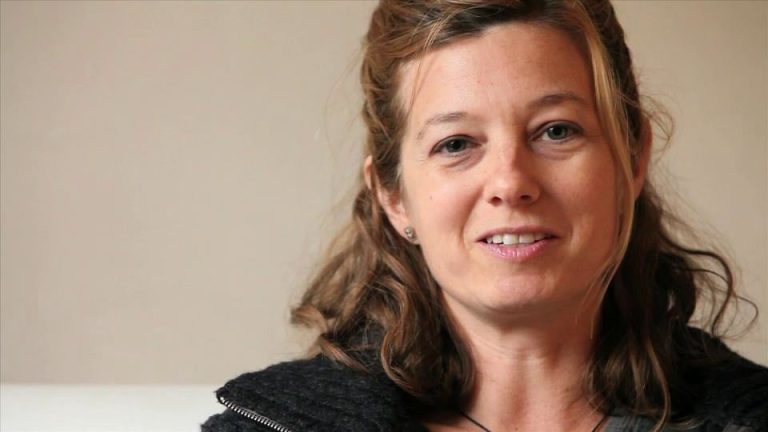
Marko Drobnjakovic - Foundry 2023 Presentation
Foundry Photojournalism Workshop
See more ▾
Legal
Privacy Policy
/
Terms of Use
Home
✕
✕
All
Resource Center
✕
✕
✕