Home
Videos
Steve McCurry – Profile
Resource Center: Non-Photographic Diversions
Outreach Program
Natalie Fobes – Profile
Nacho Corbella Video Page
Media Archive
Foundry 2011 – Buenos Aires
LEARN
SEE
NETWORK
REFERENCE
NAV MENU
Organization
Legacy
FOUNDRY
PWAU
Outreach
Interviews
Ideas around images
HOME
About Us
Outreach Program
Videos
Resource Center
Search for:
Search Button
Home
»
»
Daniel Schwartz
Daniel Schwartz
←
Return to People Index
PhotoWings Media Archive
Share
Featured
1:35:35
Reporting on War in Afghanistan
Daniel Schwartz
Photographer
Projects · appears in 3
The VII Foundation
Collection
Foundry Photojournalism Workshop
Collection
Blue Earth Alliance
Collection
Tags
Concepts
Context
9
Legacy
9
Reflection
9
Storytelling
6
Collaboration
5
Resilience
3
Perspective
2
Trust
2
Inspiration
1
Topics
War Photography
9
Afghanistan
6
Photojournalism
6
Documentary Photography
5
Photography Book
5
Photography Grant
5
Climate Crisis & Environment
4
Conflict Photography
4
Environmental Photography
4
Photography Awards
4
Arctic & Polar
3
Arles
3
Africa
2
Human Rights Photography
2
New York
2
Photography Workshop
2
Career Development
1
Community Photography
1
Haiti
1
India
1
Iraq & Middle East
1
Mexico
1
Photo Archive
1
Photo Education Programs
1
Photo Research & Access
1
+15 more
Portfolio
9 videos · every appearance
1:35:35
Reporting on War in Afghanistan
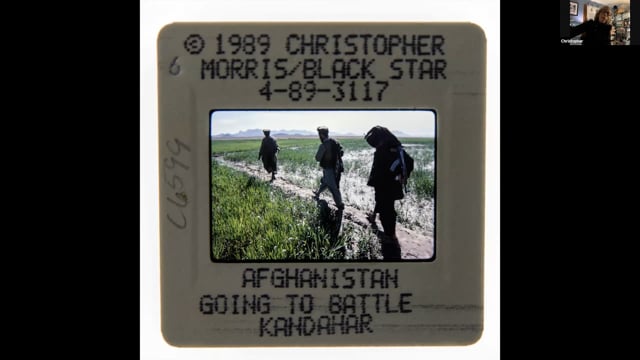
On 7 October 2001, the United States and its allies launched “Operation Enduring Freedom” with airstrikes against Taliban forces in Afghanistan. As part of the Bush administration’s “war on terror” retaliating against those responsible for the 11 September 2001 terrorist attacks on New York and Washington, this military action began what would become America’s longest-ever military engagement. US forces and NATO troops remained in Afghanistan even after the 2014 handover of security responsibility to Afghan national forces. Now, after the deaths of 47,000 Afghan civilians, 66,000 Afghan police and soldiers, 2,400 US military personnel, 1,100 allied forces – and the expenditure of more than $2 trillion – the Taliban has retaken Afghanistan. The collapse of the Afghan government and its military, and the chaotic withdrawal of western personnel from Afghanistan, was triggered by the Biden administration’s policy of getting all US forces out of Afghanistan by 9 September 2021 (a deadline that was four months later than agreed in the Trump administration’s February 2021 peace deal with the Taliban). The triumph of Taliban forces committed to establishing the Islamic Emirate of Afghanistan imperils the human rights of many in the Afghan population whose life had improved somewhat in the last twenty years. VII Agency was founded a few days before the terrorist attacks of 11 September 2001, and the first assignment was photographing the aftermath of those attacks, in both the US and Afghanistan. In the last twenty years, many VII photographers have reported extensively on the war in Afghanistan, building on work they did in the 1980s and 1990s prior to American involvement with boots on the ground. This special event offers a retrospective of some of VII’s coverage, with contributions from the late Alexandra Boulat, Ron Haviv, Christopher Morris, Seamus Murphy, and Daniel Schwartz. The discussion will probe the question of how photojournalism visualised the country and the conflict in Afghanistan, and how the work of the VII photographers contributed, for better or worse, to the visual reporting from Afghanistan.
PhotoWings
1:06:54
While the Fires Burn A Glacier Odyssey with Daniel Schwartz — Part I
This series of three webinars with Daniel Schwartz sheds light on the origins and metamorphoses, on the making-of, and the intellectual context of this climate crises-driven project accomplished between 2009 and 2017. The series is moderated by Ziyah Gafic. For While the Fires Burn. A Glacier Odyssey the author embarked on a journey that led from the relics of Holocene glaciation in Switzerland and the Alps into the milieu of the Anthropocene, to collapsing glaciers on three continents. The outcome, a “glaciology in pictures,” as it were, is the result of a synthesis of scientific observation and artistic action. The environmental context makes the project the counterpart and continuation of Delta. The Perils, Profits and Politics of Water in South and Southeast Asia (1997), one of the earliest comprehensive photojournalistic studies on the climate crisis. While the Fires Burn. A Glacier Odyssey was realized partly in collaboration with institutes of the Swiss Federal Institute of Technology (ETH Zürich) and of the University of Bern, published in 2017 by Thames & Hudson and exhibited in 2018 at the Bündner Kunstmuseum, Chur, Switzerland. Part I. From Delta to Glacier The initial webinar will introduce approaches and strategies—photojournalistic, conceptual and science-supported—and discuss the reasons for merging terrestrial and aerial photography. Together, these practices have found very diverse applications during the past thirty years—at first documenting the densely populated coastal habitats in Asia increasingly endangered by sea-level rise as a consequence of the climate crisis, then, more recent, representing the accelerated agony of Alpine and Equatorial glaciers as well as of West Asian glaciers where, in the early 19th century, mountaineering and world politics had met and where conflict and glacial melt today simultaneously occur, with the risk of looming war for resources.
PhotoWings
1:07:25
While the Fires Burn A Glacier Odyssey with Daniel Schwartz — Part II
This series of three webinars with Daniel Schwartz sheds light on the origins and metamorphoses, on the making-of, and the intellectual context of this climate crises-driven project accomplished between 2009 and 2017. The series is moderated by Ziyah Gafic. For While the Fires Burn. A Glacier Odyssey the author embarked on a journey that led from the relics of Holocene glaciation in Switzerland and the Alps into the milieu of the Anthropocene, to collapsing glaciers on three continents. The outcome, a “glaciology in pictures,” as it were, is the result of a synthesis of scientific observation and artistic action. The environmental context makes the project the counterpart and continuation of Delta. The Perils, Profits and Politics of Water in South and Southeast Asia (1997), one of the earliest comprehensive photojournalistic studies on the climate crisis. While the Fires Burn. A Glacier Odyssey was realized partly in collaboration with institutes of the Swiss Federal Institute of Technology (ETH Zürich) and of the University of Bern, published in 2017 by Thames & Hudson and exhibited in 2018 at the Bündner Kunstmuseum, Chur, Switzerland.
PhotoWings
51:09
While the Fires Burn A Glacier Odyssey with Daniel Schwartz — Part III
This series of three webinars with Daniel Schwartz sheds light on the origins and metamorphoses, on the making-of, and the intellectual context of this climate crises-driven project accomplished between 2009 and 2017. The series is moderated by Ziyah Gafic. For While the Fires Burn. A Glacier Odyssey the author embarked on a journey that led from the relics of Holocene glaciation in Switzerland and the Alps into the milieu of the Anthropocene, to collapsing glaciers on three continents. The outcome, a “glaciology in pictures,” as it were, is the result of a synthesis of scientific observation and artistic action. The environmental context makes the project the counterpart and continuation of Delta. The Perils, Profits and Politics of Water in South and Southeast Asia (1997), one of the earliest comprehensive photojournalistic studies on the climate crisis. While the Fires Burn. A Glacier Odyssey was realized partly in collaboration with institutes of the Swiss Federal Institute of Technology (ETH Zürich) and of the University of Bern, published in 2017 by Thames & Hudson and exhibited in 2018 at the Bündner Kunstmuseum, Chur, Switzerland. Part III. Inquiries Concerning the Memory and Domestication of Glaciers Being a visual manifesto aimed at structural change in the way humanity deals with the climate crisis, the concluding webinar will discuss methods applied during the realization of While the Fires Burn. A Glacier Odyssey. These include the melding of the autobiographical and the socio-political, archival and archaeological research as artist practice, appropriation of historical documents in storytelling as well as the typographic word-work paired with photographs to extend their meaning. The experiential of the project echoes processes that accompanied the understanding and moral perception of glacier landscapes since they became object of study in the late 18th century.
PhotoWings
2:29
Public History: Photojournalism As Historical Evidence
In this video, award-winning photojournalists Ben Bohane, John Moore, Daniel Schwartz and Maggie Steber speak to the idea that journalists and photojournalists create “the first draft of history” and the essential role photographers play in persevering the past. Ben Bohane is an Australian photojournalist, author and TV producer who has covered Asia and the Pacific islands for the past 30 years. He is the founder and present Director of www.wakaphotos.com, the only photo agency based in the Pacific islands. He has the largest personal photo archive of the South Pacific in the world. His photographs are collected by the New York Metropolitan Museum of Art, the British Museum and the Australian War Memorial, as well as being held in private collections. His work has appeared in Vanity Fair, The New York Times, TIME, Newsweek, National Geographic, The Wall St Journal, Stern (Germany), Monocle, The Guardian, French Geo, Asahi Shimbun and many publications in Australia. He has also done tv news stories and documentaries that have been shown on ABC & SBS TV Australia, BBC, F24 (France), ARD (Germany) and NHK (Japan). John Moore is a senior staff photographer and special correspondent for Getty Images. He has photographed in 65 countries on six continents and was posted internationally for 17 years, first to Nicaragua, then India, South Africa, Mexico, Egypt and Pakistan. Since returning to the U.S. in 2008 he has since focused on immigration and border issues. Moore has won top awards throughout his career, including the 2005 Pulitzer Prize for Breaking News Photography, World Press Photo honors, the John Faber Award and the Robert Capa Gold Medal from the Overseas Press Club, Photographer of the Year from Pictures of the Year International, the NPPA and Sony World Photography Organization. Daniel Schwartz graduated from Zurich School of Arts and Craft (now Zurich University of the Arts) in 1980. He concentrates on book projects, with exhibitions, based on extensive travels, photographic essays, and reportages covering the Eastern Hemisphere from Iran to East Timor, from Turkmenistan to Bangladesh. Schwartz's art is documentary; it is in the history of places. His journalism is not a reaction to events; it builds on memory. His method is best expressed in "Travelling through the Eye of History" (published, in 2009, like all his books by Thames & Hudson), a pre- and post-9/11 observation covering Central Asia including Afghanistan, Pakistan, and Kashmir. Photographer Maggie Steber has worked in 64 countries focusing on humanitarian, cultural, and social stories. Her honors include the Leica Medal of Excellence, World Press Photo Foundation, the Overseas Press Club, Pictures of the Year, the Medal of Honor for Distinguished Service to Journalism from the University of Missouri, the Alicia Patterson and Ernst Haas Grants, and a Knight Foundation grant for the New American Newspaper project.For over three decades, Steber has worked in Haiti. Aperture published her monograph, DANCING ON FIRE. In 2013 Steber was named as one of eleven Women of Vision by National Geographic Magazine, publishing a book and touring an exhibition in five American cities. Steber has served as a Newsweek Magazine contract photographer and as the Asst. Managing Editor of Photography and Features at The Miami Herald, overseeing staff projects that won the paper a Pulitzer and two finalist recognition. Her work is included in the Library of Congress, The Richter Library and in private collections. She has exhibited internationally. Clients include National Geographic Magazine, The New York Times Magazine, Smithsonian Magazine, AARP, The Guardian, and Geo Magazine among others. Steber teaches workshops internationally including at the World Press Joop Swart Master Classes, the International Center for Photography, Foundry Workshops and and the Obscura Photo Festival.
Compilation
2:57
Climate Change: Photographing the Imperceptible Crisis
The changing climate is one the most urgent concerns for our global community, and in this video, award-winning photographers Daniel Beltrá, James Whitlow Delano, Daniel Schwartz, and Nichole Sobecki discuss the ways they have used the power of photography to catalyze conversations about our environmental crisis. Born in Madrid, Spain, Daniel Beltrá is a photographer based in Seattle, Washington. His passion for conservation is evident in images of our environment that are evocatively poignant. The most striking large-scale photographs by Beltrá are images shot from the air. This perspective gives the viewer a wider context to the beauty and destruction he witnesses, as well as revealing a delicate sense of scale. After two months of photographing the Deepwater Horizon Gulf Oil Spill, he produced many visually arresting images of the man-made disaster. Over the past two decades, Beltrá’s work has taken him to all seven continents, including several expeditions to the Brazilian Amazon, the Arctic, the Southern Oceans and the Patagonian ice fields. For his work on the Gulf Oil Spill, in 2011 he received the Wildlife Photographer of the Year Award and the Lucie Award for the International Photographer of the Year - Deeper Perspective,. His SPILL photos toured the world independently and as part of the Prix Pictet exhibitions. In 2009, Beltrá received the prestigious Prince’s Rainforest Project award granted by Prince Charles. Other highlights include the BBVA Foundation award in 2013 and the inaugural “Global Vision Award” from the Pictures of the Year International in 2008. In 2006, 2007 and 2018 he received awards for his work in the Amazon from World Press Photo. Daniel’s work has been published by the most prominent international publications including The New Yorker, Time, Newsweek, The New York Times, Le Monde, and El Pais, amongst many others. James Whitlow Delano, b. 1960, is an American-born reportage photographer based in Tokyo, Japan, and one of today’s foremost photographers of Asia. Delano's substantial oeuvre of photography in Asia, characterized by his ethereal use of vignette and partial defocus, captures quiet subjects immersed in moments of passage. His work has appeared worldwide in numerous magazines and photo festivals, from Visa Pour L’Image to Rencontres D’Arles to Noorderlicht, and has been awarded internationally, including the Alfred Eisenstadt Award (from Columbia University and LIFE magazine), Leica’s Oskar Barnack, Picture of the Year International, NPPA, and PDN, among many others. James Whitlow Delano is a grantee of the Pulitzer Center on Crisis Reporting. His series Empire was the first ever one-person show at La Triennale di Milano Fine Arts Museum. His book “Black Tsunami: Japan 2011," published by FotoEvidence, received a 2012 PX3 Award. Daniel Schwartz graduated from Zurich School of Arts and Craft (now Zurich University of the Arts) in 1980. He concentrates on book projects, with exhibitions, based on extensive travels, photographic essays, and reportages covering the Eastern Hemisphere from Iran to East Timor, from Turkmenistan to Bangladesh. Schwartz's art is documentary; it is in the history of places. His journalism is not a reaction to events; it builds on memory. His method is best expressed in "Travelling through the Eye of History" (published, in 2009, like all his books by Thames & Hudson), a pre- and post-9/11 observation covering Central Asia including Afghanistan, Pakistan, and Kashmir. Nichole Sobecki is a photographer and filmmaker based in Nairobi, Kenya. She is represented internationally by the photo agency VII. Sobecki graduated from Tufts University before beginning her career in Turkey, Lebanon, and Syria, focusing on regional issues related to identity, conflict, and human rights. From 2012-2015 Nichole led Agence France-Presse’s East Africa video bureau, and was a Rory Peck Awards News Finalist for her coverage of the Westgate mall attacks in Kenya. In 2018 she was awarded by Robert F. Kennedy Human Rights prize in new media for her images documenting Europe's response to the African migration crisis. Nichole's work has been recognized by Pictures of the Year, the One World Media Awards, the Alexandra Boulat Award for Photojournalism, The Magenta Foundation, and The Jacob Burns Film Center, among others.
Compilation
1:52
Daniel Schwartz: The Photographer's Historical Insight
Award-winning photojournalist Daniel Schwartz reflects on his experiences documenting conflicts in the Middle East and discusses how photographers can help cure our “collective amnesia” to the facts of history. Daniel Schwartz graduated from Zurich School of Arts and Craft (now Zurich University of the Arts) in 1980. He concentrates on book projects, with exhibitions, based on extensive travels, photographic essays, and reportages covering the Eastern Hemisphere from Iran to East Timor, from Turkmenistan to Bangladesh. Schwartz's art is documentary; it is in the history of places. His journalism is not a reaction to events; it builds on memory. His method is best expressed in "Travelling through the Eye of History" (published, in 2009, like all his books by Thames & Hudson), a pre- and post-9/11 observation covering Central Asia including Afghanistan, Pakistan, and Kashmir. In 1987/1988, during a forbidden journey, Schwartz became the first foreigner and photographer to travel along all sections of the Great Wall of China. His reportages about the habitats of South and Southeast Asia's deltas, endangered by the consequences of climate change, were an early photojournalistic investigation of climate change, celebrated by the Financial Times as a “visual j’accuse” and made him twice a finalist of the W. Eugene Smith Grant in Humanistic Photography (1993 and 1995). A sequel to his work "Delta" (published 1997) and awareness project, "While the Fires Burn: A Glacier Odyssey" is featured in "Beyond the Obvious," a film about Schwartz's life and work, to be released in 2018. From 1990 to 2005, Schwartz was a member of the editorial team of DU, and became the prestigious magazine's second staff photographer after Werner Bischof. From 1996 to 2004, he was a member of Lookat Photos Agency and conceived and curated major traveling exhibitions. He is a member of the Advisory Board, Program for Narrative and Documentary Practice at Tufts University. In 2012, he was Visiting Artist at the Center for Studies in the Theory and History of Photography, Institute of Art History, University of Zurich. In 2010, Schwartz was awarded the prestigious Cultural Price of the Canton of Zurich.
PhotoWings
0:51
Daniel Schwartz: Make Your Ambitions Your Editor's Expectations
Photojournalist Daniel Schwartz has published award-winning work in magazines, newspapers, and multiple books. While serving as an instructor at the 2019 Foundry Photojournalism Workshop, he gave us a few of his secrets to collaborating productively with editors. Daniel Schwartz graduated from Zurich School of Arts and Craft (now Zurich University of the Arts) in 1980. He concentrates on book projects, with exhibitions, based on extensive travels, photographic essays, and reportages covering the Eastern Hemisphere from Iran to East Timor, from Turkmenistan to Bangladesh. Schwartz's art is documentary; it is in the history of places. His journalism is not a reaction to events; it builds on memory. His method is best expressed in "Travelling through the Eye of History" (published, in 2009, like all his books by Thames & Hudson), a pre- and post-9/11 observation covering Central Asia including Afghanistan, Pakistan, and Kashmir. In 1987/1988, during a forbidden journey, Schwartz became the first foreigner and photographer to travel along all sections of the Great Wall of China. His reportages about the habitats of South and Southeast Asia's deltas, endangered by the consequences of climate change, were an early photojournalistic investigation of climate change, celebrated by the Financial Times as a “visual j’accuse” and made him twice a finalist of the W. Eugene Smith Grant in Humanistic Photography (1993 and 1995). A sequel to his work "Delta" (published 1997) and awareness project, "While the Fires Burn: A Glacier Odyssey" is featured in "Beyond the Obvious," a film about Schwartz's life and work, to be released in 2018. From 1990 to 2005, Schwartz was a member of the editorial team of DU, and became the prestigious magazine's second staff photographer after Werner Bischof. From 1996 to 2004, he was a member of Lookat Photos Agency and conceived and curated major traveling exhibitions. He is a member of the Advisory Board, Program for Narrative and Documentary Practice at Tufts University. In 2012, he was Visiting Artist at the Center for Studies in the Theory and History of Photography, Institute of Art History, University of Zurich. In 2010, Schwartz was awarded the prestigious Cultural Price of the Canton of Zurich. Schwartz had major solo exhibitions, e.g. at the Kunsthaus Zurich (1986) and the Martin-Gropius-Bau, Berlin (2011), and participated in group exhibitions stretching from the Rencontres Internationales de la Photogxraphie, Arles (1988) to the San Francisco Museum of Modern Art (2011). The Foundry Photojournalism Workshop offers majority world students who could not otherwise afford it a chance to learn from some of the world's most well respected photojournalists and photography professionals. All of the instructors volunteer their time and talent, coming from the workshop region and abroad, bringing with them a commitment to a better future through responsible visual journalism.
PhotoWings
1:04
Daniel Schwartz On Research
Daniel Schwartz has traveled around the world over the course of his photojournalism career. He tells us about the important place research has in his storytelling process and successfully creating visual narratives. Daniel Schwartz graduated from Zurich School of Arts and Craft (now Zurich University of the Arts) in 1980. He concentrates on book projects, with exhibitions, based on extensive travels, photographic essays, and reportages covering the Eastern Hemisphere from Iran to East Timor, from Turkmenistan to Bangladesh. Schwartz's art is documentary; it is in the history of places. His journalism is not a reaction to events; it builds on memory. His method is best expressed in "Travelling through the Eye of History" (published, in 2009, like all his books by Thames & Hudson), a pre- and post-9/11 observation covering Central Asia including Afghanistan, Pakistan, and Kashmir. In 1987/1988, during a forbidden journey, Schwartz became the first foreigner and photographer to travel along all sections of the Great Wall of China. His reportages about the habitats of South and Southeast Asia's deltas, endangered by the consequences of climate change, were an early photojournalistic investigation of climate change, celebrated by the Financial Times as a “visual j’accuse” and made him twice a finalist of the W. Eugene Smith Grant in Humanistic Photography (1993 and 1995). A sequel to his work "Delta" (published 1997) and awareness project, "While the Fires Burn: A Glacier Odyssey" is featured in "Beyond the Obvious," a film about Schwartz's life and work, to be released in 2018. From 1990 to 2005, Schwartz was a member of the editorial team of DU, and became the prestigious magazine's second staff photographer after Werner Bischof. From 1996 to 2004, he was a member of Lookat Photos Agency and conceived and curated major traveling exhibitions. He is a member of the Advisory Board, Program for Narrative and Documentary Practice at Tufts University. In 2012, he was Visiting Artist at the Center for Studies in the Theory and History of Photography, Institute of Art History, University of Zurich. In 2010, Schwartz was awarded the prestigious Cultural Price of the Canton of Zurich. Schwartz had major solo exhibitions, e.g. at the Kunsthaus Zurich (1986) and the Martin-Gropius-Bau, Berlin (2011), and participated in group exhibitions stretching from the Rencontres Internationales de la Photographie, Arles (1988) to the San Francisco Museum of Modern Art (2011).
PhotoWings
No videos match your search.
Collection
The VII Foundation
View project
See all 214
1:26:12
The Camera at War: 170 Years of Weaponizing Photography, with Hilary Roberts
The VII Foundation
1:14:10
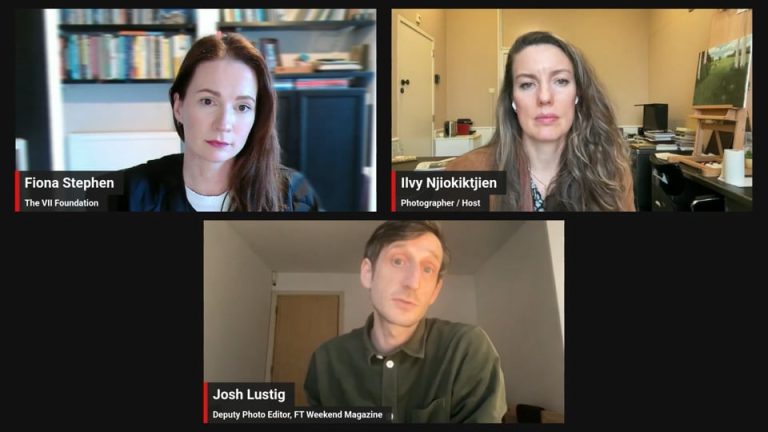
Photo Editors Series - Josh Lustig
The VII Foundation
2:22:03
Open-Source Intelligence - An Investigative Journalism Workshop
The VII Foundation
1:12:20
Photo Editors Series – Gabriel Eisenmeier
The VII Foundation
Collection
Foundry Photojournalism Workshop
View project
See all 200
1:27
Adriana Zehbrauskas: Things keeping me going - PhotoWings Interview, Foundry Workshop 2011
Foundry Photojournalism Workshop
2:26
Kael Alford: Essence of Photography - PhotoWings Interview, Foundry Workshop 2011
Foundry Photojournalism Workshop
1:54
Michael Robinson Chavez: Power of Photography and Its Lasting Impact, Foundry Photojournalism Workshop 2011
Foundry Photojournalism Workshop
2:48
Michael Robinson Chavez: Lost photos and effective archiving, Foundry Photojournalism Workshop 2011
Foundry Photojournalism Workshop
Collection
Blue Earth Alliance
View project
See all 108
3:10
Natalie Fobes: Fresh lemonade and a photographic epiphany
Blue Earth Alliance
3:48
Natalie Fobes: The ethics of presenting reality
Blue Earth Alliance
4:38
Natalie Fobes: Trust & photographic subjects
Blue Earth Alliance
5:28
Natalie Fobes: Photography as a passport to experience
Blue Earth Alliance
Legal
Privacy Policy
/
Terms of Use
Home
✕
✕
All
Resource Center
✕
✕
✕
 Featured
1:35:35
Featured
1:35:35 
 1:26:12
The Camera at War: 170 Years of Weaponizing Photography, with Hilary Roberts
The VII Foundation
1:26:12
The Camera at War: 170 Years of Weaponizing Photography, with Hilary Roberts
The VII Foundation
 1:14:10
Photo Editors Series - Josh Lustig
The VII Foundation
1:14:10
Photo Editors Series - Josh Lustig
The VII Foundation
 2:22:03
Open-Source Intelligence - An Investigative Journalism Workshop
The VII Foundation
2:22:03
Open-Source Intelligence - An Investigative Journalism Workshop
The VII Foundation
 1:12:20
Photo Editors Series – Gabriel Eisenmeier
The VII Foundation
1:12:20
Photo Editors Series – Gabriel Eisenmeier
The VII Foundation
 1:27
Adriana Zehbrauskas: Things keeping me going - PhotoWings Interview, Foundry Workshop 2011
Foundry Photojournalism Workshop
1:27
Adriana Zehbrauskas: Things keeping me going - PhotoWings Interview, Foundry Workshop 2011
Foundry Photojournalism Workshop
 2:26
Kael Alford: Essence of Photography - PhotoWings Interview, Foundry Workshop 2011
Foundry Photojournalism Workshop
2:26
Kael Alford: Essence of Photography - PhotoWings Interview, Foundry Workshop 2011
Foundry Photojournalism Workshop
 1:54
Michael Robinson Chavez: Power of Photography and Its Lasting Impact, Foundry Photojournalism Workshop 2011
Foundry Photojournalism Workshop
1:54
Michael Robinson Chavez: Power of Photography and Its Lasting Impact, Foundry Photojournalism Workshop 2011
Foundry Photojournalism Workshop
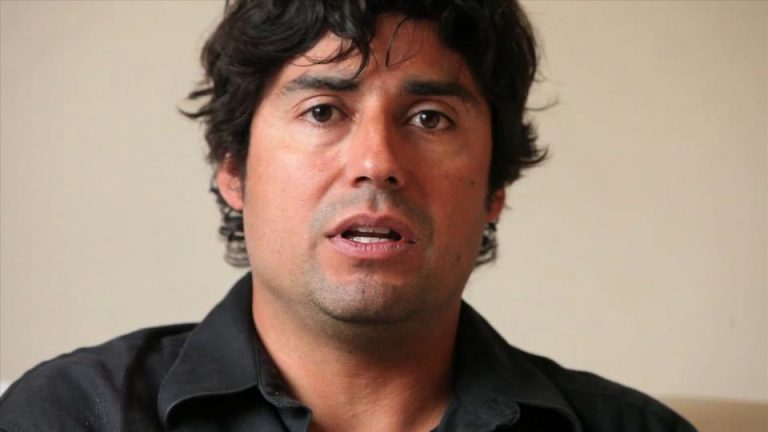 2:48
Michael Robinson Chavez: Lost photos and effective archiving, Foundry Photojournalism Workshop 2011
Foundry Photojournalism Workshop
2:48
Michael Robinson Chavez: Lost photos and effective archiving, Foundry Photojournalism Workshop 2011
Foundry Photojournalism Workshop
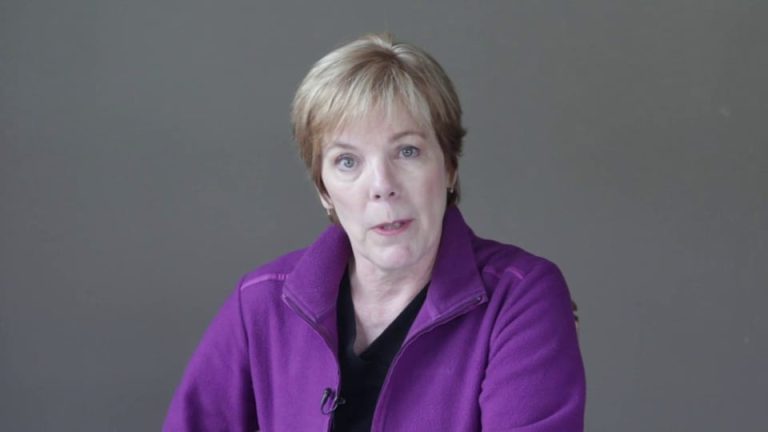 3:10
Natalie Fobes: Fresh lemonade and a photographic epiphany
Blue Earth Alliance
3:10
Natalie Fobes: Fresh lemonade and a photographic epiphany
Blue Earth Alliance
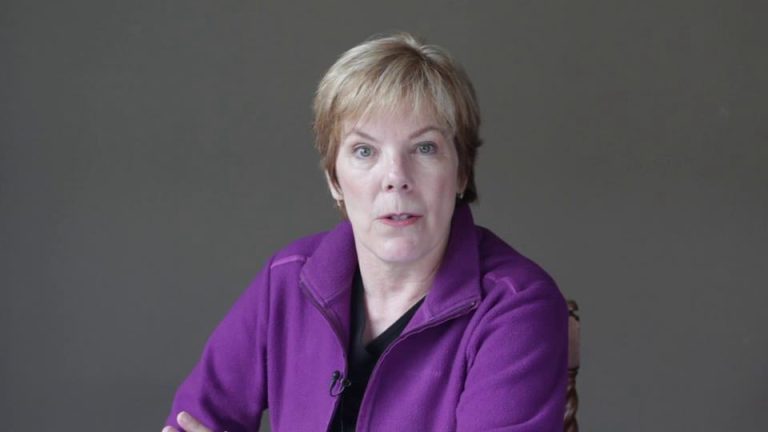 3:48
Natalie Fobes: The ethics of presenting reality
Blue Earth Alliance
3:48
Natalie Fobes: The ethics of presenting reality
Blue Earth Alliance
 4:38
Natalie Fobes: Trust & photographic subjects
Blue Earth Alliance
4:38
Natalie Fobes: Trust & photographic subjects
Blue Earth Alliance
 5:28
Natalie Fobes: Photography as a passport to experience
Blue Earth Alliance
5:28
Natalie Fobes: Photography as a passport to experience
Blue Earth Alliance