Home
Videos
Steve McCurry – Profile
Resource Center: Non-Photographic Diversions
Outreach Program
Natalie Fobes – Profile
Nacho Corbella Video Page
Media Archive
Foundry 2011 – Buenos Aires
LEARN
SEE
NETWORK
REFERENCE
NAV MENU
Organization
Legacy
FOUNDRY
PWAU
Outreach
Interviews
Ideas around images
HOME
About Us
Outreach Program
Videos
Resource Center
Search for:
Search Button
Home
»
»
Christopher Morris
Christopher Morris
←
Return to People Index
PhotoWings Media Archive
Share
Featured
1:11:45
Reporting the Siege of Sarajevo
Christopher Morris
Photojournalist
Projects · appears in 3
The VII Foundation
Collection
LOOK3 Festival of the Photograph
Collection
Foundry Photojournalism Workshop
Collection
Tags
Concepts
Context
7
Storytelling
7
Perspective
6
Reflection
6
Resilience
6
Legacy
5
Trust
5
Collaboration
3
Inspiration
3
Self-Discovery
3
Topics
Democracy & Politics
4
Photo Business & Licensing
4
Photographer Interview
4
Afghanistan
3
Archiving & Preservation
3
Bosnia & Balkans
3
Climate Crisis & Environment
3
Conflict Photography
3
Documentary Photography
3
Education & Youth
3
Health & Medicine
3
Indigenous Rights & Representation
3
Oceania & Pacific
3
Photojournalism
3
Representation & Diversity
3
Visual Heritage & Memory
3
Content Authenticity & Verification
2
Emerging Photographers
2
Grant Writing & Funding
2
Human Rights Photography
2
Iraq & Middle East
2
Mentorship & Education
2
Photo Festivals & Events
2
Photo Research & Access
2
Photographer Safety & Security
2
Photography Workshop
2
Racial Justice & Anti-Racism
2
Social Media & Photography
2
Visual Narrative
2
War Photography
2
AI in Photography
1
Animal Rights & Conservation
1
Caption Writing
1
Career Development
1
Collaborative & Community Photography
1
Consent & Access
1
Digital Revolution
1
Ethics in Photojournalism
1
Family Albums & Vernacular Photography
1
Haiti
1
Human Rights
1
Lighting Techniques
1
Long-form Photography
1
Migration & Refugees
1
Mobile Photography
1
Myanmar & Southeast Asia
1
New York
1
North America
1
Photo Books & Publications
1
Picture Editing
1
PTSD & Mental Health
1
Sarajevo
1
Sub-Saharan Africa
1
Visual Literacy
1
War & Conflict Photography
1
+45 more
Portfolio
8 videos · every appearance
1:11:45
Reporting the Siege of Sarajevo
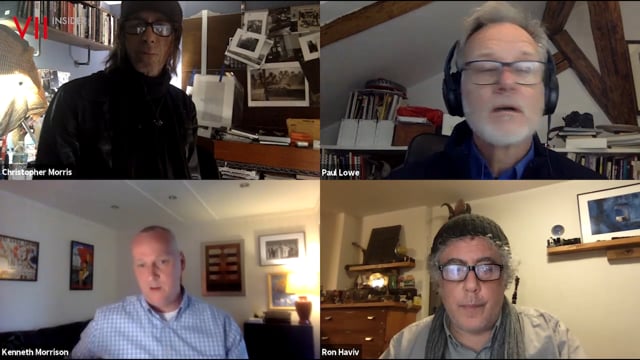
The Siege of Sarajevo remains the longest siege in modern European history, lasting three times longer than the Battle of Stalingrad and over a year longer than the Siege of Leningrad. Reporting the Siege of Sarajevo provides the first detailed account of the reporting of this siege and the role that journalists played in highlighting both military and non-military aspects of it. The book draws on detailed primary and secondary material in English and Bosnian, as well as extensive interviews with international correspondents who covered events in Sarajevo from within siege lines. It also includes hitherto unpublished images taken by the co-author and award-winning photojournalist Paul Lowe. In this VII Insider talk, Lowe and co-author Kenneth Morrison discuss the book in conversation with VII photographers and co-founders who covered the siege — Ron Haviv and Christopher Morris. They overview the scope and structure of the book, the process of putting it together, their experiences covering the historic event, and the siege’s importance to the history of the journalism profession. Dr. Paul Lowe is a Reader in Documentary Photography and the Course Leader of the Masters program in Photojournalism and Documentary Photography at the London College of Communication, University of the Arts, London, UK. Paul is an award-winning photographer who has been published in TIME, Newsweek, Life, The Sunday Times Magazine, The Observer, and The Independent, amongst others. He has covered breaking news the world over, including the fall of the Berlin Wall, Nelson Mandela’s release, famine in Africa, the conflict in the former Yugoslavia, and the destruction of Grozny. Kenneth Morrison is Professor of Modern Southeast European History at De Montfort University, UK. He has written extensively on the modern history of the Western Balkans and is the author of Nationalism, Statehood and Identity in Post-Yugoslav Montenegro (2018), Sarajevo’s Holiday Inn: On the Frontline of Politics and War (2016), Montenegro: A Modern History (2009), and the co-author of Reporting the Siege of Sarajevo (2021) and The Sandžak: A History (2013). Kenneth was a Visiting Professor at the London School of Economics and Political Science in 2018 and has previously acted as Specialist Adviser on Western Balkan politics for the UK House of Lords International Relations Select Committee. He is currently writing a book focusing on the utility of hotels in urban conflicts. Ron Haviv is an Emmy nominated and award-winning photojournalist and co-founder of the VII Agency, dedicated to documenting conflict and raising awareness about human rights issues around the globe. His first photography book, Blood and Honey: A Balkan War Journal, was called “One of the best non-fiction books of the year,” by The Los Angeles Times and “A chilling but vastly important record of a people’s suffering,” by Newsweek. His other monographs are Afghanistan: The Road to Kabul, Haiti: 12 January 2010, and The Lost Rolls. Haviv has produced an unflinching record of the injustices of war. His work in the Balkans, which spanned over a decade of conflict, was used as evidence to indict and convict war criminals at the International Criminal Tribunal for the former Yugoslavia in The Hague. President George H.W. Bush cited Haviv’s chilling photographs documenting paramilitary violence in Panama as one of the reasons for the 1989 American intervention. Haviv is the central character in six documentary films, including National Geographic Explorer’s Freelance in a World of Risk and River of Gold. He has provided expert analysis and commentary on ABC News, BBC, CNN, NPR, MSNBC, NBC Nightly News, Good Morning America, and The Charlie Rose Show. Haviv is a founding member of VII Agency based in New York. Christopher Morris was born in California in 1958 and began his career as a documentary conflict photographer working almost exclusively for TIME Magazine, where he has been on contract since 1990. He has been credited with redefining political coverage in America during his years working at the White House for TIME Magazine from 2000 till 2009. Simultaneously to his career as a photojournalist, Morris has expanded his work into the fashion world. He has received various awards, including the Robert Capa Gold Medal, the Olivier Rebbot Award, the Journalism Award from the Overseas Press Club, two Infinity Awards for photojournalism from the International Center of Photography in New York, the PDN Look Fashion Editorial Award and numerous World Press Photo awards. Morris is a founding member of VII Agency based in New York.
PhotoWings
1:35:35
Reporting on War in Afghanistan
On 7 October 2001, the United States and its allies launched “Operation Enduring Freedom” with airstrikes against Taliban forces in Afghanistan. As part of the Bush administration’s “war on terror” retaliating against those responsible for the 11 September 2001 terrorist attacks on New York and Washington, this military action began what would become America’s longest-ever military engagement. US forces and NATO troops remained in Afghanistan even after the 2014 handover of security responsibility to Afghan national forces. Now, after the deaths of 47,000 Afghan civilians, 66,000 Afghan police and soldiers, 2,400 US military personnel, 1,100 allied forces – and the expenditure of more than $2 trillion – the Taliban has retaken Afghanistan. The collapse of the Afghan government and its military, and the chaotic withdrawal of western personnel from Afghanistan, was triggered by the Biden administration’s policy of getting all US forces out of Afghanistan by 9 September 2021 (a deadline that was four months later than agreed in the Trump administration’s February 2021 peace deal with the Taliban). The triumph of Taliban forces committed to establishing the Islamic Emirate of Afghanistan imperils the human rights of many in the Afghan population whose life had improved somewhat in the last twenty years. VII Agency was founded a few days before the terrorist attacks of 11 September 2001, and the first assignment was photographing the aftermath of those attacks, in both the US and Afghanistan. In the last twenty years, many VII photographers have reported extensively on the war in Afghanistan, building on work they did in the 1980s and 1990s prior to American involvement with boots on the ground. This special event offers a retrospective of some of VII’s coverage, with contributions from the late Alexandra Boulat, Ron Haviv, Christopher Morris, Seamus Murphy, and Daniel Schwartz. The discussion will probe the question of how photojournalism visualised the country and the conflict in Afghanistan, and how the work of the VII photographers contributed, for better or worse, to the visual reporting from Afghanistan.
PhotoWings
1:14:46
Expanding the Archive with Kira Pollack and Christopher Morris
Archives bear witness and deepen our understanding of visual history. Protecting them is vital. Photographers often face a similar dilemma: how to preserve their archives from physical destruction or loss over time due to technological advances and limited resources. This challenge is one faced by contributing photographer to The VII Foundation, Christopher Morris, as he navigates the logistics and legacy associated with his own extensive archive. In this event, we speak with Christopher alongside Kira Pollack, former Director of Photography at TIME and Creative Director at Vanity Fair. They discuss their collaborative approach, exploring new technologies to preserve these vital archives and the visual histories they contain. This is at the core of Pollack’s research, highlighted in her Washington Post article, ‘Photos are Disappearing, One Archive at a Time. As a 2025 Walter Shorenstein Media & Democracy Fellow at the Harvard Kennedy School, Kira examines how AI-driven tools can deepen our understanding of visual history, support authorship and legacy, and provide new solutions for image analysis and discovery.
PhotoWings
1:00:11
Photography from Pasifika – New Digital Storytellers in Aotearoa
Is there a Pasifika perspective in photography? How does a Pasifika perspective challenge conventional visual representations of Aotearoa? What stories are emerging from a Pasifika perspective? Pasifika refers to the people, cultures, and language of Pacific groups – including Samoa, Tonga, the Cook Islands, Niue, Tokelau, Tuvalu, and other smaller Pacific nations – who are now living in Aotearoa (New Zealand). Previously, New Zealand governed most of these Pacific nations. VII Academy has partnered with Creative New Zealand to provide a program for Pasifika creatives from Aotearoa. In the first workshop in the program, which was recently completed, VII photographer Christopher Morris, supported by Pacific photographer Raymond Sagapolutele, worked with nine emerging storytellers to develop new skills and new stories. To see and discuss the Pasifika perspective, this event showcases work from emerging storytellers (including Frank Falaniko Talo, Jasmine Tuia, and Siniva Williams) who recently participated in this VII Academy workshop.
PhotoWings
1:00:10
Photography from Pasifika – New Digital Storytellers in Aotearoa
Is there a Pasifika perspective in photography? How does a Pasifika perspective challenge conventional visual representations of Aotearoa? What stories are emerging from a Pasifika perspective? Pasifika refers to the people, cultures, and language of Pacific groups – including Samoa, Tonga, the Cook Islands, Niue, Tokelau, Tuvalu, and other smaller Pacific nations – who are now living in Aotearoa (New Zealand). Previously, New Zealand governed most of these Pacific nations. VII Academy has partnered with Creative New Zealand to provide a program for Pasifika creatives from Aotearoa. In the first workshop in the program, which was recently completed, VII photographer Christopher Morris, supported by Pacific photographer Raymond Sagapolutele, worked with nine emerging storytellers to develop new skills and new stories. To see and discuss the Pasifika perspective, this event will showcase work from emerging storytellers (including Frank Falaniko Talo, Jasmine Tuia, and Siniva Williams) who recently participated in this VII Academy workshop.
PhotoWings
1:34:50
Anarchy in the USA: Revisit the Conversation with VII Photographers who Covered the Events in the Capitol
On assignment for publications including TIME, The New York Times Magazine, and The New Republic, four members of VII photographed the Trump rally and the violence that it unleashed at the Capitol in Washington, D.C., on January 6, 2021. On January 18, 2021, Gary Knight spoke with Ashley Gilbertson, Ron Haviv, Christopher Morris, and Christopher Lee, seasoned veterans of conflict, about their experiences that day. They discussed what they saw, how they made decisions, processed information and made choices during the fast-moving, unpredictable and violent events in their own country. Below is some of the Q&A that followed the conversation.
PhotoWings
59:16
Christopher Morris – LOOK3 2016 Artist Talk
2016 LOOK3 Artist Christopher Morris has been credited with redefining political coverage in America during his years covering the White House (from 2000 until 2009), and has expanded his portfolio to include work from the world of fashion. Morris gives an Artist talk at the Paramount Theater for the 2016 Festival.
PhotoWings
19:25
Christopher Morris LOOK3 2016 Artist Talk
2016 LOOK3 Artist Christopher Morris has been credited with redefining political coverage in America during his years covering the White House (from 2000 until 2009), and has expanded his portfolio to include work from the world of fashion. Morris gives an Artist talk at the Paramount Theater for the 2016 Festival.
PhotoWings
No videos match your search.
Collection
The VII Foundation
View project
See all 214
1:26:12
The Camera at War: 170 Years of Weaponizing Photography, with Hilary Roberts
The VII Foundation
1:14:10
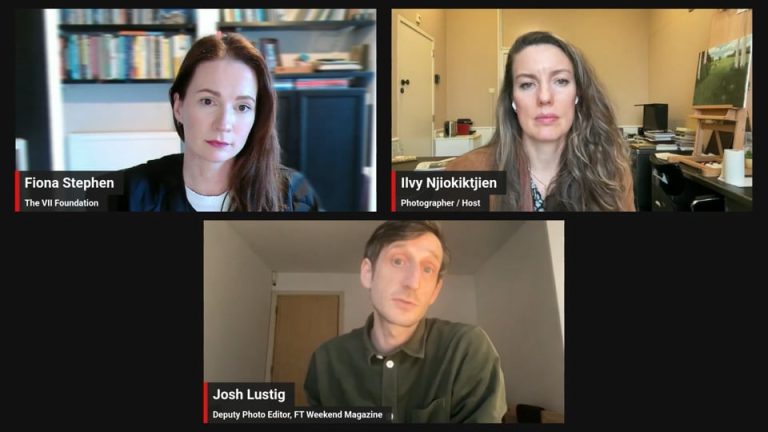
Photo Editors Series - Josh Lustig
The VII Foundation
2:22:03
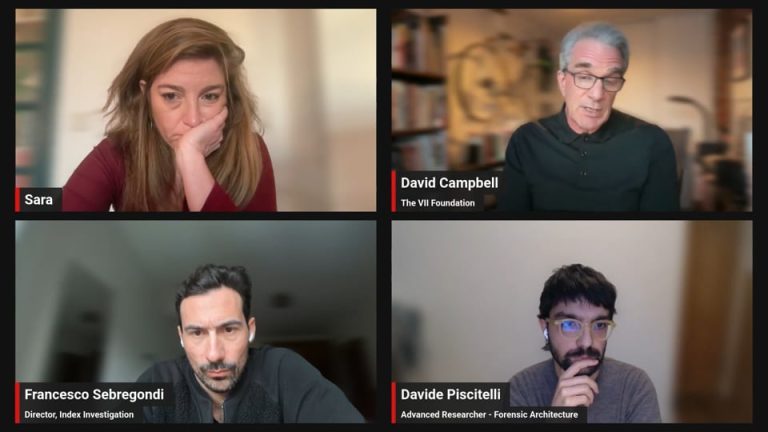
Open-Source Intelligence - An Investigative Journalism Workshop
The VII Foundation
1:12:20
Photo Editors Series – Gabriel Eisenmeier
The VII Foundation
Collection
LOOK3 Festival of the Photograph
View project
See all 37
23:49
LOOK3 2013 - Michael Nick Nichols
LOOK3 Festival of the Photograph
21:07
LOOK3 2013 - Carrie Mae Weems
LOOK3 Festival of the Photograph
19:46
LOOK3 2013 - Susan Meiselas
LOOK3 Festival of the Photograph
29:44
Joe Riis – LOOK3 2016 Artist Talk
LOOK3 Festival of the Photograph
Collection
Foundry Photojournalism Workshop
View project
See all 200
1:27
Adriana Zehbrauskas: Things keeping me going - PhotoWings Interview, Foundry Workshop 2011
Foundry Photojournalism Workshop
2:26
Kael Alford: Essence of Photography - PhotoWings Interview, Foundry Workshop 2011
Foundry Photojournalism Workshop
1:54
Michael Robinson Chavez: Power of Photography and Its Lasting Impact, Foundry Photojournalism Workshop 2011
Foundry Photojournalism Workshop
2:48
Michael Robinson Chavez: Lost photos and effective archiving, Foundry Photojournalism Workshop 2011
Foundry Photojournalism Workshop
Legal
Privacy Policy
/
Terms of Use
Home
✕
✕
All
Resource Center
✕
✕
✕
 Featured
1:11:45
Featured
1:11:45 
 1:26:12
The Camera at War: 170 Years of Weaponizing Photography, with Hilary Roberts
The VII Foundation
1:26:12
The Camera at War: 170 Years of Weaponizing Photography, with Hilary Roberts
The VII Foundation
 1:14:10
Photo Editors Series - Josh Lustig
The VII Foundation
1:14:10
Photo Editors Series - Josh Lustig
The VII Foundation
 2:22:03
Open-Source Intelligence - An Investigative Journalism Workshop
The VII Foundation
2:22:03
Open-Source Intelligence - An Investigative Journalism Workshop
The VII Foundation
 1:12:20
Photo Editors Series – Gabriel Eisenmeier
The VII Foundation
1:12:20
Photo Editors Series – Gabriel Eisenmeier
The VII Foundation
 1:27
Adriana Zehbrauskas: Things keeping me going - PhotoWings Interview, Foundry Workshop 2011
Foundry Photojournalism Workshop
1:27
Adriana Zehbrauskas: Things keeping me going - PhotoWings Interview, Foundry Workshop 2011
Foundry Photojournalism Workshop
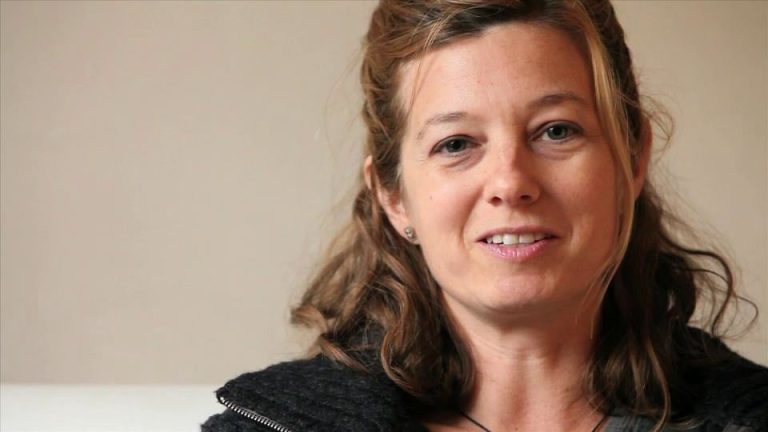 2:26
Kael Alford: Essence of Photography - PhotoWings Interview, Foundry Workshop 2011
Foundry Photojournalism Workshop
2:26
Kael Alford: Essence of Photography - PhotoWings Interview, Foundry Workshop 2011
Foundry Photojournalism Workshop
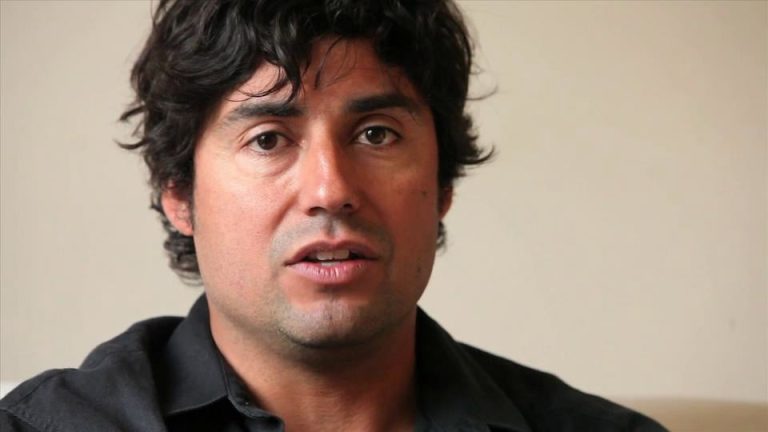 1:54
Michael Robinson Chavez: Power of Photography and Its Lasting Impact, Foundry Photojournalism Workshop 2011
Foundry Photojournalism Workshop
1:54
Michael Robinson Chavez: Power of Photography and Its Lasting Impact, Foundry Photojournalism Workshop 2011
Foundry Photojournalism Workshop
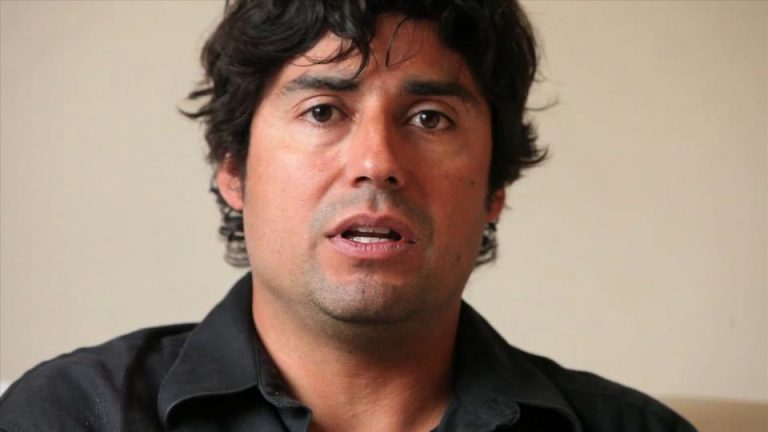 2:48
Michael Robinson Chavez: Lost photos and effective archiving, Foundry Photojournalism Workshop 2011
Foundry Photojournalism Workshop
2:48
Michael Robinson Chavez: Lost photos and effective archiving, Foundry Photojournalism Workshop 2011
Foundry Photojournalism Workshop