Home
Videos
Steve McCurry – Profile
Resource Center: Non-Photographic Diversions
Outreach Program
Natalie Fobes – Profile
Nacho Corbella Video Page
Media Archive
Foundry 2011 – Buenos Aires
LEARN
SEE
NETWORK
REFERENCE
NAV MENU
Organization
Legacy
FOUNDRY
PWAU
Outreach
Interviews
Ideas around images
HOME
About Us
Outreach Program
Videos
Resource Center
Search for:
Search Button
Home
»
»
Amy Gulick
Amy Gulick
←
Return to People Index
PhotoWings Media Archive
Share
Featured
32:46
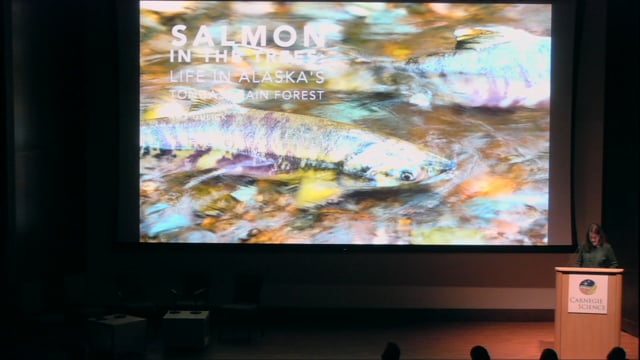
Amy Gulick - Salmon in the Trees WildSpeak Presentation 2016
Amy Gulick
Photographer
Projects · appears in 3
Blue Earth Alliance
Collection
WildSpeak
Collection
ILCP — International League of Conservation Photographers
Collection
Tags
Concepts
Perspective
1
Self-Discovery
1
Topics
Photo Education Programs
1
Photography Book
1
War Photography
1
Portfolio
1 video · every appearance
32:46
Amy Gulick - Salmon in the Trees WildSpeak Presentation 2016
Home to an abundance of bears, bald eagles and salmon, the Tongass National Forest in Alaska contains one-third of the worlds rare old-growth coastal temperate rain forest. Seeing the forest for the fish is key to understanding and conserving this magnificent ecosystem and the wild and human communities it supports. Amy Gulick has been working in the region for years and her book on this work, "Salmon in the Trees: Life in Alaska's Tongass Rain Forest," is the recipient of an Independent Publisher Book Award.
PhotoWings
No videos match your search.
Blue Earth Alliance
Collection · Related
3:41
Sara Terry on Collaboration
In this video, award-winning photographer Sara Terry discusses how the seemingly solitary work of photography is actually very collaborative, from the connection between a photographer and their subject, to working with distribution partners, and how collaboration can be energizing and supportive. Sara Terry is a documentary photographer and filmmaker known for her work covering post-conflict stories, and a 2012 Guggenheim Fellow for her long-term project, “Forgiveness and Conflict: Lessons from Africa.” Her first long-term post-conflict work, “Aftermath: Bosnia’s Long Road to Peace,” led her to found The Aftermath Project in 2003 on the premise that “War is Only Half the Story.” An accomplished speaker on aftermath and visual literacy issues, her lectures include a TedX talk, “Storytelling in a Post-Journalism Word,” and several appearances at The Annenberg Space for Photography. She has directed and produced two feature-length documentaries, Fambul Tok (2011) and FOLK (2013). Fambul Tok, about a groundbreaking grass-roots forgiveness program in Sierra Leone, premiered at SXSW in 2011, and grew out of her photo project, “Forgiveness and Conflict: Lessons from Africa.” It was supported by the Sundance Documentary Institute and Chicken and Egg, and was hailed by Paste magazine as one of the best 100 documentaries of all time. Terry became a photographer and filmmaker after a long, award-winning career in print and public radio. She is working on her third documentary, “A Decent Home,” about mobile home parks and the affordable housing crisis.
Blue Earth Alliance
2:05
Sara Terry on Words, Photography & Motivation
Award-winning photographer Sara Terry thought she might become a lawyer when she was a student, and only found photography later in life. Here, she tells us about the process of discovering the power of visual storytelling. Sara Terry is a documentary photographer and filmmaker known for her work covering post-conflict stories, and a 2012 Guggenheim Fellow for her long-term project, “Forgiveness and Conflict: Lessons from Africa.” Her first long-term post-conflict work, “Aftermath: Bosnia’s Long Road to Peace,” led her to found The Aftermath Project in 2003 on the premise that “War is Only Half the Story.” An accomplished speaker on aftermath and visual literacy issues, her lectures include a TedX talk, “Storytelling in a Post-Journalism Word,” and several appearances at The Annenberg Space for Photography. She has directed and produced two feature-length documentaries, Fambul Tok (2011) and FOLK (2013). Fambul Tok, about a groundbreaking grass-roots forgiveness program in Sierra Leone, premiered at SXSW in 2011, and grew out of her photo project, “Forgiveness and Conflict: Lessons from Africa.” It was supported by the Sundance Documentary Institute and Chicken and Egg, and was hailed by Paste magazine as one of the best 100 documentaries of all time. Terry became a photographer and filmmaker after a long, award-winning career in print and public radio. She is working on her third documentary, “A Decent Home,” about mobile home parks and the affordable housing crisis.
Blue Earth Alliance
27:55
David Moskowitz – Fundraising and Public Engagement in Conservation Storytelling | Collaborations for Cause 2017
David Moskowitz is the author and photographer of two books, Wildlife of the Pacific Northwest and Wolves in the Land of Salmon. As a biologist, photographer and educator, David has worked on wildlife studies and conservation initiatives around the United Sates and internationally. The focus of much his work has been on using tracking and other non-invasive research methods to study wildlife and promote conservation. David is certified as a Track and Sign Specialist, Trailing Specialist, and Senior Tracker through Cybertracker Conservation and is an Evaluator for this rigorous international professional certification program. David holds a bachelor’s degree in Environmental Studies from Prescott College. David’s current project, the Mountain Caribou Initiative, is a multi-media exploration of the conservation challenges faced in the world’s largest remaining inland temperate rainforest, found in the interior mountains of western North America and home to one of the most unique and endangered populations of caribou found on the planet.
Blue Earth Alliance
27:05
Thomas Patterson – What I Look For When I Hire A Photographer | Collaborations for Cause 2017
Thomas Patterson is a photo editor and content specialist for the international humanitarian organization Mercy Corps. After more than a decade on the photo staff of the Statesman Journal newspaper, Thomas earned a master's degree in Multimedia Journalism and undertook a Graduate Teaching Fellowship at the University of Oregon School of Journalism and Communication. Based in Portland, Oregon, Thomas is also a photojournalist and multimedia storyteller specializing in multimedia projects for editorial, corporate and non-profit clients around the world.
Blue Earth Alliance
31:39
World Vision – Content Is Not King | Collaborations for Cause 2017
The role of content and image in fulfilling storytelling, marketing and editorial needs at World Vision US. Tom Costanza spent the sixteen years as television news photographer at stations from Scranton to Seattle covering everything from presidential inaugurations and shuttle launches to earthquakes, hurricanes, and house fires. TV news helped him develop resourcefulness, compassion, and solid storytelling skills. When the opportunity to work at World Vision presented itself, Tom was able to use storytelling for a cause. Since joining World Vision in July 2001, Tom has spent a good part of the last sixteen years on the road capturing stories, spending three weeks traveling around the world to cover the Asia tsunami and in 2010, the earthquake in Haiti. He’s reported on child soldiers in Uganda, street children in Mexico, AIDS in India, and hunger in the Horn of Africa. Fortunately, the many heart-rending moments have been balanced by witnessing the joy, faith, and resilience of the world’s extraordinary people, his camera reflecting their light in some of the world’s darkest places. Phil Manzano is the director of Content Development in the Brand & Campaigns division of World Vision US. Currently, he oversees a team of writers and photographers, publications and promotional content. Prior to World Vision, he worked at The Oregonian in Portland, Ore. for more than 25 years as a writer and editor. He lives in the Rainier Valley area of South Seattle, and, on sunny days, can be found biking along Lake Washington. For almost 30 years, Jon Warren has dedicated his life to helping the poor to be seen and heard. He has traveled to upward of 60 countries producing photographs for many global publications and organizations such as World Vision. As Photojournalism Manager for World Vision, Jon travels the globe to tell the story of the charity’s work to build a better world for children. He’s photographed everything from the Haiti earthquake to the famine in Somalia. He lived with a Kenyan family trying to survive on food rations and spent a month with children in Cambodia working in a garbage dump. Through it all, his goal is to go beyond the statistics of poverty to show his subjects as individual and worthwhile human beings, loved and treasured by God. Jon has won awards from the National Press Photographers Association Pictures of the Year, Communications Arts, Folio, Maggie Awards, the Society of Professional Journalists, and Magnum Opus.
Blue Earth Alliance
30:18
Bryan Monroe – Why What We Do Still Matters? Hint: We're Not There Yet | Collaborations for Cause 2017
Bryan Monroe is the Verizon Chair and professor at Temple University’s School of Media and Communication (SMC). Before joining Temple, he was most recently the Washington editor, Opinion & Commentary at CNN and editor of CNNPolitics.com. His work at that network included editorial planning and content strategy across all online platforms for CNN in its Washington, D.C., bureau. He also served as the assistant vice president of news at Knight Ridder Newspapers, where he helped lead journalists at the Biloxi Sun Herald to the 2006 Pulitzer Prize Gold Medal for Public Service for their coverage of Hurricane Katrina. Monroe was also vice president and editorial director at EBONY and Jet magazines, where he led coverage of the 2008 presidential election, conducted the first post-election interview with President Barack Obama and did the last interview with pop legend Michael Jackson before his death. Monroe was a Nieman Fellow at Harvard University and served as a visiting professor at Northwestern University’s Medill School of Journalism. He was president of the National Association of Black Journalists from 2005 to 2007.
Blue Earth Alliance
35:02
Collaborations for Cause 2017 Panel
Blue Earth Alliance
54:38
Annie Griffiths – If You Want to Go Far, Go Together | Collaborations for Cause 2017
In the changing climate of editorial publishing, photographers are learning that, if you want to go far, go together. Friendship, collaboration and collective resolve can motivate action on both editorial and business issues. One of the first women photographers to work for National Geographic, Annie Griffiths has photographed in nearly 150 countries during her illustrious career. She has worked on dozens of magazine and book projects for the Society, including stories on Lawrence of Arabia, Baja California, Galilee, Petra, Sydney, New Zealand, and Jerusalem. In addition to her magazine work, Annie is deeply committed to photographing for aid organizations around the world. She is the Executive Director of Ripple Effect Images, a collective of photographers who document the programs that are empowering women and girls throughout the developing world, especially as they deal with the devastating effects of climate change. Annie is known for her warmth, and for her ability to quickly create photographs that humanize various situations and cultures. Annie’s work has also appeared in LIFE, Geo, Smithsonian, Fortune, Merian, Stern, and many other publications. With author Barbara Kingsolver, she produced Last Stand: America’s Virgin Lands, a book celebrating the last pristine wilderness in North America. Proceeds from the book have raised more than a quarter of a million dollars for grassroots land conservation. In 2008. Annie published A Camera, Two Kids and a Camel, a photo memoir about balance, and the joy of creating a meaningful life. In 2010, she published Simply Beautiful Photographs, which was named the top photo/art book of the year by Amazon and by Barnes and Noble. Annie is currently at work on three new books. Annie has received awards from the National Press Photographers Association, the Associated Press, the National Organization of Women, The University of Minnesota and the White House News Photographers Association.
Blue Earth Alliance
See more ▾
WildSpeak
Collection · Related
22:18
Gorongosa National Park - Piotr Naskrecki - WildSpeak Presentation 2016
Stories of success in nature conservation are much rarer than those of defeat. Yet restoration of Gorongosa National Park in Mozambique is one of such rare examples. Completely destroyed during a 20-year civil war, Gorongosa was able to rebound thanks to a unique partnership between a US-based NGO and the Mozambican government. An important tool in the park’s recovery was the use of film and photography to bring the park into the public’s awareness, and turn the perception of Mozambique from that of a war-torn place to a unique ecotourism destination.
WildSpeak
20:28
Carlton Ward Jr. - Florida Wildlife Corridor | Wildspeak Presentation 2016
Carlton Ward Jr. has been working for years on the Florida Wildlife Corridor that aims to connect, protect, and restore corridors of conserved lands and waters essential for the survival of Florida’s diverse wildlife.
WildSpeak
22:16
Jaime Rojo - The Living Med | Wildspeak Presentation 2016
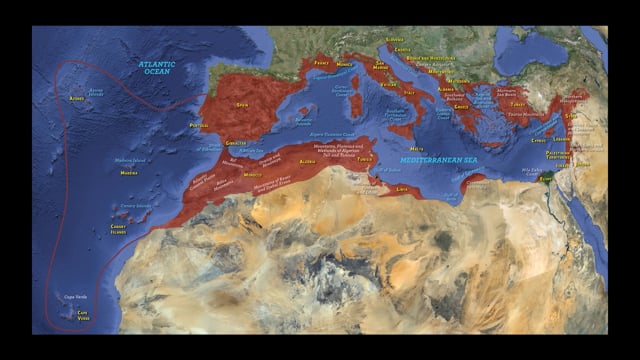
Jaime Rojo presents The Living Med The Living Med is an ambitious nature photography and multimedia communications project, with the conservation of the Mediterranean Basin at its heart. The Mediterranean hotspot expands well beyond its shores, and it is one of the most biologically and culturally diverse regions in the world, and one of the most threatened too. From the wetlands of the Balkans to the cold Cedar forests of Northern Africa, follow the work of three Spanish photographers united in their mission to protect this vast ecoregion. For more information on this effort see http://www.thelivingmed.org/
WildSpeak
18:07
Mangroves The Skin of our Coasts - Octavio Aburto - WildSpeak Presentation 2016
Mangroves, the forests forming the transition between land and sea, provide numerous ecosystem services. Mangroves protect the shoreline and provide essential nursery habitat for many species. Despite these benefits, we continue to destroy them at an alarming rate; so fast in fact, that in the last 50 years we have lost almost 50% of the earth’s mangrove forests. “Mangroves: the skin of our coasts” is a new communication campaign to stop the deforestation of these incredible forests.
WildSpeak
21:31
Protecting the Orangutans of Borneo - Tim Laman - WildSpeak Presentation 2016
Tim Laman discusses his 20 years of collaborating with local and international NGOs to protect and preserve the natural habitats of Borneo's orangutans.
WildSpeak
37:44
Garth Lenz - Extreme Oil, Infrastructure, and Our Warming Planet - WiLDSPEAK Presentation 2016
As we approach peak conventional oil, we are relying increasingly on so-called unconventional or extreme oil sources. Tar Sands, fracking, Bakken crude, as well as the ever increasing associated pipelines, bomb trains, and other infrastructure entrench us to fossil fuel dependence which is the greatest threat to the future of the planet. Join Garth as he illustrates these issues, their impacts and discusses possible solutions.
WildSpeak
28:47
Lucas Bustamante - Amphibians of Ecuador - WildSpeak Presentation 2016
Working in Ecuador, his home country and one of the most biodiverse and threatened countries on Earth, iLCP Emerging League Photographer Lucas Bustamante has developed a successful formula to raise global awareness for amphibians and reptiles, without doubts some of the richest but least studied group of vertebrates. Lucas has partnered with local and international conservation groups who are using his photography to start projects that serve to protect these animals through education, science, and ecotourism efforts throughout Ecuador.
WildSpeak
29:08
Bridget Conneely - WildCam Gorongosa WildSpeak Presentation 2016
Bridget Conneely is a wildlife ecologist with over 12 years of experience working with conservation organizations on ecological research and communications. She works with the Educational Media team to produce a variety of classroom resources with a particular focus on environmental science and conservation topics, including the citizen science website WildCam Gorongosa. Conneely earned her master’s degree in zoology from the University of British Columbia, where she researched the ecology of reintroduced buffalo and wildebeest in Mozambique. Prior to joining HHMI, she spent 9 years working with the Gorongosa Restoration Project, a non-profit organization working to restore Gorongosa National Park in Mozambique. In this role, she gained considerable experience communicating science and conservation messages to the public through print, digital, and interactive media.
WildSpeak
See more ▾
ILCP — International League of Conservation Photographers
Collection · Related
22:18
Gorongosa National Park - Piotr Naskrecki - WildSpeak Presentation 2016
Stories of success in nature conservation are much rarer than those of defeat. Yet restoration of Gorongosa National Park in Mozambique is one of such rare examples. Completely destroyed during a 20-year civil war, Gorongosa was able to rebound thanks to a unique partnership between a US-based NGO and the Mozambican government. An important tool in the park’s recovery was the use of film and photography to bring the park into the public’s awareness, and turn the perception of Mozambique from that of a war-torn place to a unique ecotourism destination.
ILCP — International League of Conservation Photographers
20:28
Carlton Ward Jr. - Florida Wildlife Corridor | Wildspeak Presentation 2016
Carlton Ward Jr. has been working for years on the Florida Wildlife Corridor that aims to connect, protect, and restore corridors of conserved lands and waters essential for the survival of Florida’s diverse wildlife.
ILCP — International League of Conservation Photographers
22:16
Jaime Rojo - The Living Med | Wildspeak Presentation 2016
Jaime Rojo presents The Living Med The Living Med is an ambitious nature photography and multimedia communications project, with the conservation of the Mediterranean Basin at its heart. The Mediterranean hotspot expands well beyond its shores, and it is one of the most biologically and culturally diverse regions in the world, and one of the most threatened too. From the wetlands of the Balkans to the cold Cedar forests of Northern Africa, follow the work of three Spanish photographers united in their mission to protect this vast ecoregion. For more information on this effort see http://www.thelivingmed.org/
ILCP — International League of Conservation Photographers
18:07
Mangroves The Skin of our Coasts - Octavio Aburto - WildSpeak Presentation 2016
Mangroves, the forests forming the transition between land and sea, provide numerous ecosystem services. Mangroves protect the shoreline and provide essential nursery habitat for many species. Despite these benefits, we continue to destroy them at an alarming rate; so fast in fact, that in the last 50 years we have lost almost 50% of the earth’s mangrove forests. “Mangroves: the skin of our coasts” is a new communication campaign to stop the deforestation of these incredible forests.
ILCP — International League of Conservation Photographers
21:31
Protecting the Orangutans of Borneo - Tim Laman - WildSpeak Presentation 2016
Tim Laman discusses his 20 years of collaborating with local and international NGOs to protect and preserve the natural habitats of Borneo's orangutans.
ILCP — International League of Conservation Photographers
32:09
Sandesh Kadur - India's Mountains of Life - WildSpeak Presentation 2016
The Himalaya and the Western Ghats, two of India’s great mountain ranges, hold within their folds, many mysteries - unnamed species, primeval cultures and the promise of magical cures that can heal all of humanity. Documenting these mountains and their bio-cultural richness has been something of a passion for Sandesh Kadur. Working closely with ATREE, a conservation organization, Sandesh’s work over the last two decades, in the form of books and documentaries, has brought a much-needed spotlight on two little known regions. These books and documentaries served as ammunition in helping get the Western Ghats declared as a UNESCO World Heritage Site. As India continues forward in its economic growth, and its population continues to increase, it will be more and more critical to protect these mountains of life into the future.
ILCP — International League of Conservation Photographers
3:54
Steve Winter on Working With Big Cats
Award-winning photojournalist Steve Winter tells us how he became involved with documenting big cats – “I didn’t choose big cats, big cats must of chosen me.” Steve Winter has been a photographer for National Geographic for over two decades. He specializes in wildlife, and particularly, big cats. Winter has been named BBC Wildlife Photographer of the Year and BBC Wildlife Photojournalist of the Year, was a two-time winner of PoYI’s Global Vision Award and won first prize in the nature story category from World Press Photo in 2008 and 2014. He lectures globally on photography and conservation issues and has appeared on CBS Nightly News, 60 Minutes, NPR, BBC, CNN, NG WILD and other media outlets. Winter feels that he has a great responsibility not only to show and excite readers about the natural world, but about its fascinating people and cultures as well. Above all, he wants to give National Geographic readers what he always wanted — a front row seat next to the photographer and writer, and to be part of the team along for the adventure. In November 2013, National Geographic published Winter’s photography book Tigers Forever: Saving the World’s Most Endangered Cat, with text written by environmental journalist Sharon Guynup.
ILCP — International League of Conservation Photographers
1:48
Steve Winter on Early Inspiration
Award-winning photojournalist Steve Winter tells us about how he became inspired to pursue a career in photography and the ways his father nurtured his visual literacy. Steve Winter has been a photographer for National Geographic for over two decades. He specializes in wildlife, and particularly, big cats. Winter has been named BBC Wildlife Photographer of the Year and BBC Wildlife Photojournalist of the Year, was a two-time winner of PoYI’s Global Vision Award and won first prize in the nature story category from World Press Photo in 2008 and 2014. He lectures globally on photography and conservation issues and has appeared on CBS Nightly News, 60 Minutes, NPR, BBC, CNN, NG WILD and other media outlets. Winter feels that he has a great responsibility not only to show and excite readers about the natural world, but about its fascinating people and cultures as well. Above all, he wants to give National Geographic readers what he always wanted — a front row seat next to the photographer and writer, and to be part of the team along for the adventure. In November 2013, National Geographic published Winter’s photography book Tigers Forever: Saving the World’s Most Endangered Cat, with text written by environmental journalist Sharon Guynup.
ILCP — International League of Conservation Photographers
See more ▾
Legal
Privacy Policy
/
Terms of Use
Home
✕
✕
All
Resource Center
✕
✕
✕