Home
Videos
Steve McCurry – Profile
Resource Center: Non-Photographic Diversions
Outreach Program
Natalie Fobes – Profile
Nacho Corbella Video Page
Media Archive
Foundry 2011 – Buenos Aires
LEARN
SEE
NETWORK
REFERENCE
NAV MENU
Organization
Legacy
FOUNDRY
PWAU
Outreach
Interviews
Ideas around images
HOME
About Us
Outreach Program
Videos
Resource Center
Search for:
Search Button
Home
»
»
Aaron Huey
Aaron Huey
←
Return to People Index
PhotoWings Media Archive
Share
Featured
56:34
Aaron Huey - Keynote
Aaron Huey
Photographer and Editor
Projects · appears in 1
Blue Earth Alliance
Collection
Tags
Concepts
Collaboration
1
Storytelling
1
Trust
1
Topics
Community Photography
1
India
1
Photography Book
1
Street Photography
1
War Photography
1
Portfolio
1 video · every appearance
56:34
Aaron Huey - Keynote
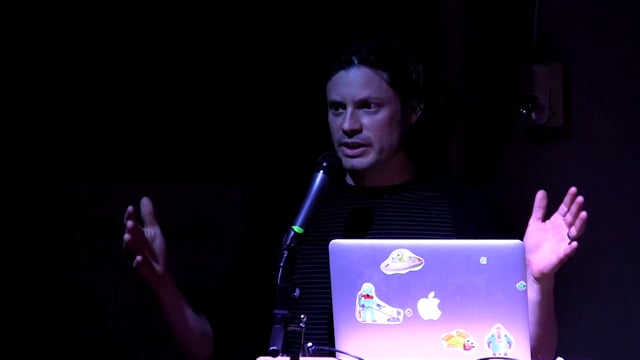
Photographer Aaron Huey, whose community-centered coverage of the Pine Ridge Reservation became both a TED talk and a National Geographic cover story (2012), will show how he worked with both communities and organizations to take a story beyond the editorial pages of magazines. He will also talk about his use of social media to grow and fund both non traditional projects and movements like his Honor the Treaties initiative. Aaron Huey is a National Geographic Photographer, and Contributing Artist for Harper's magazine. His 8 year project on the Pine Ridge Indian Reservation has taken many shapes, from a 2010 TED talk to a 2012 National Geographic magazine cover story, to an ongoing street art/advocacy campaign with Shepard Fairey. Huey is widely known for his 3,349 mile, solo walk across America (with his dog Cosmo). The 2002 journey lasted 154 days. They walked everystep. He has done 25 stories for the National Geographic magazines, including a story on the Sherpa that will come out this fall. Most recently his book Mitakuye Oyasin (All my Relations), published by Radius Books, won best photography book in the 2014 Independent Publisher Book Awards. www.blueearth.org www.photowings.org
PhotoWings
No videos match your search.
Blue Earth Alliance
Collection · Related
3:41
Sara Terry on Collaboration
In this video, award-winning photographer Sara Terry discusses how the seemingly solitary work of photography is actually very collaborative, from the connection between a photographer and their subject, to working with distribution partners, and how collaboration can be energizing and supportive. Sara Terry is a documentary photographer and filmmaker known for her work covering post-conflict stories, and a 2012 Guggenheim Fellow for her long-term project, “Forgiveness and Conflict: Lessons from Africa.” Her first long-term post-conflict work, “Aftermath: Bosnia’s Long Road to Peace,” led her to found The Aftermath Project in 2003 on the premise that “War is Only Half the Story.” An accomplished speaker on aftermath and visual literacy issues, her lectures include a TedX talk, “Storytelling in a Post-Journalism Word,” and several appearances at The Annenberg Space for Photography. She has directed and produced two feature-length documentaries, Fambul Tok (2011) and FOLK (2013). Fambul Tok, about a groundbreaking grass-roots forgiveness program in Sierra Leone, premiered at SXSW in 2011, and grew out of her photo project, “Forgiveness and Conflict: Lessons from Africa.” It was supported by the Sundance Documentary Institute and Chicken and Egg, and was hailed by Paste magazine as one of the best 100 documentaries of all time. Terry became a photographer and filmmaker after a long, award-winning career in print and public radio. She is working on her third documentary, “A Decent Home,” about mobile home parks and the affordable housing crisis.
Blue Earth Alliance
2:05
Sara Terry on Words, Photography & Motivation
Award-winning photographer Sara Terry thought she might become a lawyer when she was a student, and only found photography later in life. Here, she tells us about the process of discovering the power of visual storytelling. Sara Terry is a documentary photographer and filmmaker known for her work covering post-conflict stories, and a 2012 Guggenheim Fellow for her long-term project, “Forgiveness and Conflict: Lessons from Africa.” Her first long-term post-conflict work, “Aftermath: Bosnia’s Long Road to Peace,” led her to found The Aftermath Project in 2003 on the premise that “War is Only Half the Story.” An accomplished speaker on aftermath and visual literacy issues, her lectures include a TedX talk, “Storytelling in a Post-Journalism Word,” and several appearances at The Annenberg Space for Photography. She has directed and produced two feature-length documentaries, Fambul Tok (2011) and FOLK (2013). Fambul Tok, about a groundbreaking grass-roots forgiveness program in Sierra Leone, premiered at SXSW in 2011, and grew out of her photo project, “Forgiveness and Conflict: Lessons from Africa.” It was supported by the Sundance Documentary Institute and Chicken and Egg, and was hailed by Paste magazine as one of the best 100 documentaries of all time. Terry became a photographer and filmmaker after a long, award-winning career in print and public radio. She is working on her third documentary, “A Decent Home,” about mobile home parks and the affordable housing crisis.
Blue Earth Alliance
32:46
Amy Gulick - Salmon in the Trees WildSpeak Presentation 2016
Home to an abundance of bears, bald eagles and salmon, the Tongass National Forest in Alaska contains one-third of the worlds rare old-growth coastal temperate rain forest. Seeing the forest for the fish is key to understanding and conserving this magnificent ecosystem and the wild and human communities it supports. Amy Gulick has been working in the region for years and her book on this work, "Salmon in the Trees: Life in Alaska's Tongass Rain Forest," is the recipient of an Independent Publisher Book Award.
Blue Earth Alliance
27:55
David Moskowitz – Fundraising and Public Engagement in Conservation Storytelling | Collaborations for Cause 2017
David Moskowitz is the author and photographer of two books, Wildlife of the Pacific Northwest and Wolves in the Land of Salmon. As a biologist, photographer and educator, David has worked on wildlife studies and conservation initiatives around the United Sates and internationally. The focus of much his work has been on using tracking and other non-invasive research methods to study wildlife and promote conservation. David is certified as a Track and Sign Specialist, Trailing Specialist, and Senior Tracker through Cybertracker Conservation and is an Evaluator for this rigorous international professional certification program. David holds a bachelor’s degree in Environmental Studies from Prescott College. David’s current project, the Mountain Caribou Initiative, is a multi-media exploration of the conservation challenges faced in the world’s largest remaining inland temperate rainforest, found in the interior mountains of western North America and home to one of the most unique and endangered populations of caribou found on the planet.
Blue Earth Alliance
27:05
Thomas Patterson – What I Look For When I Hire A Photographer | Collaborations for Cause 2017
Thomas Patterson is a photo editor and content specialist for the international humanitarian organization Mercy Corps. After more than a decade on the photo staff of the Statesman Journal newspaper, Thomas earned a master's degree in Multimedia Journalism and undertook a Graduate Teaching Fellowship at the University of Oregon School of Journalism and Communication. Based in Portland, Oregon, Thomas is also a photojournalist and multimedia storyteller specializing in multimedia projects for editorial, corporate and non-profit clients around the world.
Blue Earth Alliance
31:39
World Vision – Content Is Not King | Collaborations for Cause 2017
The role of content and image in fulfilling storytelling, marketing and editorial needs at World Vision US. Tom Costanza spent the sixteen years as television news photographer at stations from Scranton to Seattle covering everything from presidential inaugurations and shuttle launches to earthquakes, hurricanes, and house fires. TV news helped him develop resourcefulness, compassion, and solid storytelling skills. When the opportunity to work at World Vision presented itself, Tom was able to use storytelling for a cause. Since joining World Vision in July 2001, Tom has spent a good part of the last sixteen years on the road capturing stories, spending three weeks traveling around the world to cover the Asia tsunami and in 2010, the earthquake in Haiti. He’s reported on child soldiers in Uganda, street children in Mexico, AIDS in India, and hunger in the Horn of Africa. Fortunately, the many heart-rending moments have been balanced by witnessing the joy, faith, and resilience of the world’s extraordinary people, his camera reflecting their light in some of the world’s darkest places. Phil Manzano is the director of Content Development in the Brand & Campaigns division of World Vision US. Currently, he oversees a team of writers and photographers, publications and promotional content. Prior to World Vision, he worked at The Oregonian in Portland, Ore. for more than 25 years as a writer and editor. He lives in the Rainier Valley area of South Seattle, and, on sunny days, can be found biking along Lake Washington. For almost 30 years, Jon Warren has dedicated his life to helping the poor to be seen and heard. He has traveled to upward of 60 countries producing photographs for many global publications and organizations such as World Vision. As Photojournalism Manager for World Vision, Jon travels the globe to tell the story of the charity’s work to build a better world for children. He’s photographed everything from the Haiti earthquake to the famine in Somalia. He lived with a Kenyan family trying to survive on food rations and spent a month with children in Cambodia working in a garbage dump. Through it all, his goal is to go beyond the statistics of poverty to show his subjects as individual and worthwhile human beings, loved and treasured by God. Jon has won awards from the National Press Photographers Association Pictures of the Year, Communications Arts, Folio, Maggie Awards, the Society of Professional Journalists, and Magnum Opus.
Blue Earth Alliance
30:18
Bryan Monroe – Why What We Do Still Matters? Hint: We're Not There Yet | Collaborations for Cause 2017
Bryan Monroe is the Verizon Chair and professor at Temple University’s School of Media and Communication (SMC). Before joining Temple, he was most recently the Washington editor, Opinion & Commentary at CNN and editor of CNNPolitics.com. His work at that network included editorial planning and content strategy across all online platforms for CNN in its Washington, D.C., bureau. He also served as the assistant vice president of news at Knight Ridder Newspapers, where he helped lead journalists at the Biloxi Sun Herald to the 2006 Pulitzer Prize Gold Medal for Public Service for their coverage of Hurricane Katrina. Monroe was also vice president and editorial director at EBONY and Jet magazines, where he led coverage of the 2008 presidential election, conducted the first post-election interview with President Barack Obama and did the last interview with pop legend Michael Jackson before his death. Monroe was a Nieman Fellow at Harvard University and served as a visiting professor at Northwestern University’s Medill School of Journalism. He was president of the National Association of Black Journalists from 2005 to 2007.
Blue Earth Alliance
35:02
Collaborations for Cause 2017 Panel
Blue Earth Alliance
See more ▾
Legal
Privacy Policy
/
Terms of Use
Home
✕
✕
All
Resource Center
✕
✕
✕