Home
Videos
Steve McCurry – Profile
Resource Center: Non-Photographic Diversions
Outreach Program
Natalie Fobes – Profile
Nacho Corbella Video Page
Media Archive
Foundry 2011 – Buenos Aires
LEARN
SEE
NETWORK
REFERENCE
NAV MENU
Organization
Legacy
FOUNDRY
PWAU
Outreach
Interviews
Ideas around images
HOME
About Us
Outreach Program
Videos
Resource Center
Search for:
Search Button
Home
»
»
Sara Terry
Sara Terry
←
Return to People Index
PhotoWings Media Archive
Share
Featured
45:35
Kris Graves – 1492/1619 American Aftermaths
Sara Terry
Guggenheim Fellow, Documentary Photographer / Filmmaker
Projects · appears in 4
Blue Earth Alliance
Collection
Collaborations for Cause
Collection
Other Original Content
Collection
Eddie Adams Workshop
Collection
Tags
Concepts
Collaboration
16
Resilience
16
Storytelling
16
Inspiration
8
Reflection
8
Legacy
7
Perspective
7
Trust
7
Context
6
Self-Discovery
4
People
Scott Squire
1
Topics
Documentary Photography
10
War Photography
9
Photography Awards
8
Education & Youth
7
Photography Education
7
Photojournalism
6
Africa
5
Collaboration & Partnership
5
Conflict Photography
5
Photographer Interview
5
Health & Medicine
4
Human Rights
4
Photo Education Programs
4
Photo Festivals & Events
4
Ukraine
4
Archiving & Preservation
3
Career Development
3
Community Photography
3
Democracy & Politics
3
Photography Grant
3
Social Media & Photography
3
Visual Heritage & Memory
3
Climate Crisis & Environment
2
Collaborative & Community Photography
2
Grant Writing & Funding
2
Latin America
2
Multimedia & Transmedia
2
Photographer Safety & Security
2
Picture Editing
2
Representation & Diversity
2
South Asia
2
Visual Literacy
2
Visual Narrative
2
Visual Storytelling
2
Afghanistan
1
Amy Benson
1
Caption Writing
1
Content Authenticity & Verification
1
Creative Collaboration
1
Family Albums & Vernacular Photography
1
Indigenous Rights & Representation
1
Joseph Sywenkyj
1
Kris Graves
1
Long-form Photography
1
Mentorship & Education
1
Migration & Refugees
1
Myanmar & Southeast Asia
1
North America
1
Oceania & Pacific
1
Photo Research & Access
1
Portrait Photography
1
Poverty & Economic Inequality
1
Racial Justice & Anti-Racism
1
Street Photography
1
Sub-Saharan Africa
1
Syria
1
Trauma-Informed Practice
1
War & Conflict Photography
1
+48 more
Portfolio
16 videos · every appearance
2:45
Sara Terry - Inspiration
PhotoWings
45:35
Kris Graves – 1492/1619 American Aftermaths
This event is a conversation between 2021 Aftermath Project grant winner Kris Graves and Aftermath Project founder, and VII photographer, Sara Terry. Their talk focuses on Kris’ grant-winning project, Privileged Mediocrity and the Deceived Within. Kris shows images he made during his grant year, as he explores systematic unfairness in America – and talks with Sara about his critique of the ways racism, capitalism and power have shaped the U.S. They both share ideas about what goes into writing an American Aftermath grant proposal, and the kinds of projects that might be a good fit for the grant. Sara talks about the judging process and what judges look for.
PhotoWings
59:40
Documenting the Housing Crisis, with Sara Terry
How can you tell the story of a social issue like the affordable housing crisis in the U.S.? What does this story reveal about wealth and inequality in America? And when many of society’s problems are often only represented by data, reports, and statistics, what does it take to make a compelling documentary? In this event, Sara Terry will present her film “A Decent Home,” and discuss how and why she spent six and a half years on this project which addresses issues of class and economic inequality through the lives of mobile home park residents who can’t afford housing anywhere else.
PhotoWings
56:48
Wounds Ukraine by Joseph Sywenkyj
In this event with Joseph Sywenkyj and Sara Terry, Joseph will present his project Wounds, an intimate study of Ukrainian activists and soldiers who were severely wounded during the Euromaidan Revolution and Russia’s ongoing brutal war against Ukraine. It focuses intensely on individuals and their families who fought for justice, democracy, and Ukraine’s continued independence. This ongoing documentation, which he began in 2014, reveals what are likely the most vulnerable and painful moments in the lives of these men and women. A central objective of this project is to give Ukrainians an unvarnished perspective of how those wounded in war heal over time. This can guide and comfort those confronted with similar situations. For the international audience, it helps to serve as a reminder of the human cost of war and the imperative of supporting Ukraine and defending democracy. Wounds was awarded the Aftermath Project Grant in 2022, and Sara Terry will discuss how the grant operates and what it seeks to achieve.
PhotoWings
1:07:48
How to apply for grants, with Sara Terry and Raymond Thompson
Grants are an increasingly important funding source for documentary photography projects and stories. Grant applications require a mix of written proposals and visual materials. Have you ever wondered how to present the visual materials best? Which photo to put first when you apply for a grant? How to sequence 20 or 30 photos for a proposal? Join our conversation with Sara Terry, director of The Aftermath Project and member of VII Photo, and Raymond Thompson, the 2023 grant winner of the 1492/1619 American Aftermaths grant, to discuss these issues. During this event, Sara and Raymond will explain how to create a strong proposal. They will share writing tips and demonstrate how they recommend sequencing photographs.
PhotoWings
1:17:24
1 in 6 by 2030: How to Visualize a Demographic Transition
People worldwide are living longer. As the World Health Organization reports, today, most people can expect to live into their sixties and beyond. Indeed, by 2030, 1 in 6 people in the world will be aged 60 years or over. Every country in the world is experiencing growth in both the size and the proportion of older persons in the population, and all countries face significant challenges to ensure that their health and social systems can cope with and benefit from this demographic shift. This shift and the challenges it brings stem from dramatically improved life expectancy. According to Our World in Data, “Since 1900 the global average life expectancy has more than doubled and is now above 70 years [72 years, to be exact]. The inequality of life expectancy is still very large across and within countries. in 2019 the country with the lowest life expectancy is the Central African Republic with 53 years, in Japan life expectancy is 30 years longer.” In this event, we will discuss a major new documentary project–1 in 6 by 2030–led by Sara Terry, Ed Kashi, and Ilvy Njiokiktjien. This global, collaborative project will bring together photographers worldwide to produce compelling ways of humanizing what is, despite its social significance, a dry statistic on aging and demography.
PhotoWings
52:04
Four Questions on Photography Sara Terry in Conversation With…Ilvy Njiokiktjien
“Four Questions on Photography: Ilvy Njiokiktjien in Conversation With…” is a series of events where well-known photographers discuss with Ilvy their response to the four questions below. In this episode, however, Sara Terry, one of Ilvy’s guests in the series, turns the tables and puts the same questions to Ilvy: – What is your most important photograph, how did you make it, and what impact do you think it had? – What is your biggest photo failure; an image you wanted or needed but you messed up somehow? – What is your dream image or story? – What advice would you give to your younger self?
PhotoWings
2:05
Sara Terry on Words, Photography & Motivation
Award-winning photographer Sara Terry thought she might become a lawyer when she was a student, and only found photography later in life. Here, she tells us about the process of discovering the power of visual storytelling. Sara Terry is a documentary photographer and filmmaker known for her work covering post-conflict stories, and a 2012 Guggenheim Fellow for her long-term project, “Forgiveness and Conflict: Lessons from Africa.” Her first long-term post-conflict work, “Aftermath: Bosnia’s Long Road to Peace,” led her to found The Aftermath Project in 2003 on the premise that “War is Only Half the Story.” An accomplished speaker on aftermath and visual literacy issues, her lectures include a TedX talk, “Storytelling in a Post-Journalism Word,” and several appearances at The Annenberg Space for Photography. She has directed and produced two feature-length documentaries, Fambul Tok (2011) and FOLK (2013). Fambul Tok, about a groundbreaking grass-roots forgiveness program in Sierra Leone, premiered at SXSW in 2011, and grew out of her photo project, “Forgiveness and Conflict: Lessons from Africa.” It was supported by the Sundance Documentary Institute and Chicken and Egg, and was hailed by Paste magazine as one of the best 100 documentaries of all time. Terry became a photographer and filmmaker after a long, award-winning career in print and public radio. She is working on her third documentary, “A Decent Home,” about mobile home parks and the affordable housing crisis.
PhotoWings
3:41
Sara Terry on Collaboration
In this video, award-winning photographer Sara Terry discusses how the seemingly solitary work of photography is actually very collaborative, from the connection between a photographer and their subject, to working with distribution partners, and how collaboration can be energizing and supportive. Sara Terry is a documentary photographer and filmmaker known for her work covering post-conflict stories, and a 2012 Guggenheim Fellow for her long-term project, “Forgiveness and Conflict: Lessons from Africa.” Her first long-term post-conflict work, “Aftermath: Bosnia’s Long Road to Peace,” led her to found The Aftermath Project in 2003 on the premise that “War is Only Half the Story.” An accomplished speaker on aftermath and visual literacy issues, her lectures include a TedX talk, “Storytelling in a Post-Journalism Word,” and several appearances at The Annenberg Space for Photography. She has directed and produced two feature-length documentaries, Fambul Tok (2011) and FOLK (2013). Fambul Tok, about a groundbreaking grass-roots forgiveness program in Sierra Leone, premiered at SXSW in 2011, and grew out of her photo project, “Forgiveness and Conflict: Lessons from Africa.” It was supported by the Sundance Documentary Institute and Chicken and Egg, and was hailed by Paste magazine as one of the best 100 documentaries of all time. Terry became a photographer and filmmaker after a long, award-winning career in print and public radio. She is working on her third documentary, “A Decent Home,” about mobile home parks and the affordable housing crisis.
PhotoWings
1:47
Sara Terry on the Importance of Grace When Disappointed
Photographer Sara Terry has traveled around the world, producing many award-winning visual stories over the years. In this video, she gives us insight into how she remains resilient during hard times. Sara Terry is a documentary photographer and filmmaker known for her work covering post-conflict stories, and a 2012 Guggenheim Fellow for her long-term project, “Forgiveness and Conflict: Lessons from Africa.” Her first long-term post-conflict work, “Aftermath: Bosnia’s Long Road to Peace,” led her to found The Aftermath Project in 2003 on the premise that “War is Only Half the Story.” An accomplished speaker on aftermath and visual literacy issues, her lectures include a TedX talk, “Storytelling in a Post-Journalism Word,” and several appearances at The Annenberg Space for Photography. She has directed and produced two feature-length documentaries, Fambul Tok (2011) and FOLK (2013). Fambul Tok, about a groundbreaking grass-roots forgiveness program in Sierra Leone, premiered at SXSW in 2011, and grew out of her photo project, “Forgiveness and Conflict: Lessons from Africa.” It was supported by the Sundance Documentary Institute and Chicken and Egg, and was hailed by Paste magazine as one of the best 100 documentaries of all time. Terry became a photographer and filmmaker after a long, award-winning career in print and public radio. She is working on her third documentary, “A Decent Home,” about mobile home parks and the affordable housing crisis.
PhotoWings
0:56
Sara Terry on Making a Photograph That Is Yours
In this video, award-winning photographer Sara Terry explains the importance of finding your personal visual voice. Sara Terry is a documentary photographer and filmmaker known for her work covering post-conflict stories, and a 2012 Guggenheim Fellow for her long-term project, “Forgiveness and Conflict: Lessons from Africa.” Her first long-term post-conflict work, “Aftermath: Bosnia’s Long Road to Peace,” led her to found The Aftermath Project in 2003 on the premise that “War is Only Half the Story.” An accomplished speaker on aftermath and visual literacy issues, her lectures include a TedX talk, “Storytelling in a Post-Journalism Word,” and several appearances at The Annenberg Space for Photography. She has directed and produced two feature-length documentaries, Fambul Tok (2011) and FOLK (2013). Fambul Tok, about a groundbreaking grass-roots forgiveness program in Sierra Leone, premiered at SXSW in 2011, and grew out of her photo project, “Forgiveness and Conflict: Lessons from Africa.” It was supported by the Sundance Documentary Institute and Chicken and Egg, and was hailed by Paste magazine as one of the best 100 documentaries of all time. Terry became a photographer and filmmaker after a long, award-winning career in print and public radio. She is working on her third documentary, “A Decent Home,” about mobile home parks and the affordable housing crisis.
PhotoWings
49:39
Four Questions on Photography Ilvy Njiokiktjien in Conversation With…Sara Terry
“Four Questions on Photography: Ilvy Njiokiktjien in Conversation With…” is a series of events where each month well-known photographers discuss with Ilvy their response to these questions: What is your most important photograph, how did you make it, and what impact do you think it had? What is your biggest photo failure; an image you wanted or needed but you messed up somehow? What is your dream image or story? What advice would you give to your younger self? In this first episode of the series, Ilvy is in conversation with Sara Terry.
PhotoWings
4:23
Sara Terry: A Lesson on Visual Literacy
At the 2016 Collaborations for Cause Conference, we had the privilege of interviewing award-winning photojournalist Sara Terry, who gave us valuable insights into visual literacy and let us view many of her powerful photographs. In this video, Terry discusses creating lesson plans about the power of the still image, and guides us through the process of “seeing” one of her most celebrated photographs, using critical thinking skills to gain understanding. As she says, “I don’t know if there is anything more powerful than a still photo to take you into that vertical space of reflection, engagement and empathy.” This interview was conducted by PhotoWings in partnership with The Aftermath Project and the Blue Earth Alliance. Sara Terry is an award-winning documentary photographer and filmmaker, and journalist. She was a 2012 Guggenheim Fellow in Photography -- and a member of IATSE Local 600. She is also the founder and artistic director of The Aftermath Project, a grant-making, educational non-profit founded on the premise that “War is Only Half the Story.” She has lectured at The Annenberg Space for Photography in Los Angeles, and TedXNashville 2013, "Storytelling in a Post-Journalism World." She teaches at The Community Storytelling Project at Venice Arts. More info: saraterry.com theaftermathproject.org photowings.org blueearth.org © PhotoWings All Rights Reserved
PhotoWings
4:56
Sara Terry on The Aftermath Project
At the 2016 Collaborations for Cause Conference, award-winning photojournalist Sara Terry offered the history behind her foundation The Aftermath Project, an educational nonprofit she started to support photojournalism documenting post-conflict stories. In this video, Terry takes us through the formative experiences she had as a photojournalist that lead to the evolution of this important organization, which celebrates a decade of remarkable work this year. Terry discusses a number of the powerful projects funded by Aftermath which demonstrate that "war in only half the story." This interview was conducted by PhotoWings in partnership with The Aftermath Project and the Blue Earth Alliance. Sara Terry is an award-winning documentary photographer and filmmaker, and journalist. She was a 2012 Guggenheim Fellow in Photography -- and a member of IATSE Local 600. She is also the founder and artistic director of The Aftermath Project, a grant-making, educational non-profit founded on the premise that “War is Only Half the Story.” She has lectured at The Annenberg Space for Photography in Los Angeles, and TedXNashville 2013, "Storytelling in a Post-Journalism World." She teaches at The Community Storytelling Project at Venice Arts. More info: saraterry.com theaftermathproject.org photowings.org blueearth.org © PhotoWings All Rights Reserved
PhotoWings
19:59
Sara Terry: The Aftermath Project, War is Only Half the Story: from project to non-profit - Collaborations for Cause 2016
Sara Terry shares the pros and cons of starting a non-profit as a photographer, and how her own passion for an issue led from a long-term personal project to a grant making program for other artists. Now in the 10th year of the Aftermath Project, Sara reflects on the privilege of curating a conversation, the challenges of fundraising on behalf of other people's projects and how to maintain her own vision, integrity and artistry throughout. Sarah Terry is an award-winning documentary photographer, filmmaker, and journalist. She is a 2012 Guggenheim Fellow in Photography and a member of IATSE Local 600. She is the founder and artistic director of The Aftermath Project, a grant-making, educational non-profit founded on the premise that “War is Only Half the Story.” In addition to this work, Sarah is a teacher, focusing on the aftermath of war and visual literacy. She has given lectures at The Annenberg Space for Photography in Los Angeles and TedXNashville, as well as teaching The Community Storytelling Project at Venice Arts. Collaborations for Cause is a two-day event that brings together cutting-edge content producers and front-line organizations for an exploration of how to harness the power of the evolving media landscape. Presented by Blue Earth Alliance, the third annual conference builds upon the organization's 18-year history of facilitating issue-driven visual storytelling. From a mix of in-depth case studies, insightful panel discussions, and "unconference" break-out sessions, participants leave inspired with fresh approaches, an expanded network of contacts and new resolve to build lasting positive change.
PhotoWings
6:34
Creative Collaboration – Blue Earth Alliance
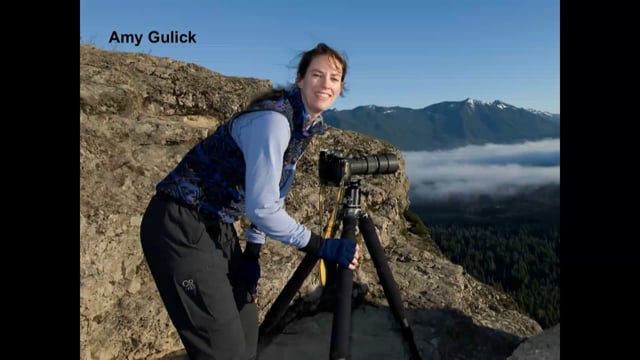
Earlier this year at Blue Earth Alliance’s Collaborations for Cause Conference, PhotoWings sat down with award-winning photojournalists and industry leaders to talk about the importance of collaboration. The group reflected on their wealth of experience producing dynamic and creative content, and how others can use the power of teamwork. Featuring (in order of appearance): Tom Kennedy, Tim Greyhavens, Amy Benson, Daniel Beltra, Jeff Cappella, Roger Ressmeyer, Louie Schwartzberg, Alasdair Turner, Greg Constantine, Sara Terry, and Scott Squire
Compilation
No videos match your search.
Blue Earth Alliance
Collection · Related
3:10
Natalie Fobes: Fresh lemonade and a photographic epiphany
At the Blue Earth Alliance's Collaborations for Cause conference, documentary photographer Natalie Fobes sat down with PhotoWings to offer inspirational stories from her career, as well as her insights into the photographic medium. No stranger to the power of photography to create change, she may be best remembered for her harrowing coverage of the Exxon Valdez disaster in the pages of National Geographic. Fobes founded the Blue Earth Alliance along with Phil Borges in 1996 to act as an aid for documentary photographers who seek to create positive change through their storytelling. Here, she discusses her thoughts about the power of photography and recalls her first experience of photography's potential for storytelling. PhotoWings' mission is to highlight and help facilitate the power of photography to influence the world. We help photography to be better understood, created, utilized, seen, and saved.
Blue Earth Alliance
3:48
Natalie Fobes: The ethics of presenting reality
At the Blue Earth Alliance's Collaborations for Cause conference, documentary photographer Natalie Fobes sat down with PhotoWings to offer inspirational stories from her career, as well as her insights into the photographic medium. No stranger to the power of photography to create change, she may be best remembered for her harrowing coverage of the Exxon Valdez disaster in the pages of National Geographic. Fobes founded the Blue Earth Alliance along with Phil Borges in 1996 to act as an aid for documentary photographers who seek to create positive change through their storytelling. While discussing ethics in her craft, Natalie tells us that photographers have a distinct responsibility to be fair and honest. She does not believe in setting up situations for the camera, especially in nature. PhotoWings' mission is to highlight and help facilitate the power of photography to influence the world. We help photography to be better understood, created, utilized, seen, and saved.
Blue Earth Alliance
5:28
Natalie Fobes: Photography as a passport to experience
At the Blue Earth Alliance's Collaborations for Cause conference, documentary photographer Natalie Fobes sat down with PhotoWings to offer inspirational stories from her career, as well as her insights into the photographic medium. No stranger to the power of photography to create change, she may be best remembered for her harrowing coverage of the Exxon Valdez disaster in the pages of National Geographic. Fobes founded the Blue Earth Alliance along with Phil Borges in 1996 to act as an aid for documentary photographers who seek to create positive change through their storytelling. For this segment, Natalie Fobes shares some haunting memories from the Exxon Valdez spill. Despite the hard times, however, she makes it clear that photography can also be a vehicle to wonderful experiences. “The good and the bad are part of being a photographer, and I would never trade that for another line of work,” she explains. PhotoWings' mission is to highlight and help facilitate the power of photography to influence the world. We help photography to be better understood, created, utilized, seen, and saved.
Blue Earth Alliance
4:38
Natalie Fobes: Trust & photographic subjects
At the Blue Earth Alliance's Collaborations for Cause conference, documentary photographer Natalie Fobes sat down with PhotoWings to offer inspirational stories from her career, as well as her insights into the photographic medium. No stranger to the power of photography to create change, she may be best remembered for her harrowing coverage of the Exxon Valdez disaster in the pages of National Geographic. Fobes founded the Blue Earth Alliance along with Phil Borges in 1996 to act as an aid for documentary photographers who seek to create positive change through their storytelling. How does Natalie approach people in order to photograph them? She is keen to stay honest with the subjects about the use of the photographs and never deliberately intends to make others look bad, whether she was covering the Exxon Valdez spill or shooting stock photography. Natalie also relates a story about a special connection she had to a subject while working in Siberia. PhotoWings' mission is to highlight and help facilitate the power of photography to influence the world. We help photography to be better understood, created, utilized, seen, and saved.
Blue Earth Alliance
1:50
Natalie Fobes: “Never take ‘no’ for an answer”
At the Blue Earth Alliance's Collaborations for Cause conference, documentary photographer Natalie Fobes sat down with PhotoWings to offer inspirational stories from her career, as well as her insights into the photographic medium. No stranger to the power of photography to create change, she may be best remembered for her harrowing coverage of the Exxon Valdez disaster in the pages of National Geographic. Fobes founded the Blue Earth Alliance along with Phil Borges in 1996 to act as an aid for documentary photographers who seek to create positive change through their storytelling. Photographer Natalie Fobes talks with PhotoWings about her resilient attitude towards her work. “If one door closes, then look for a window in the room.” PhotoWings' mission is to highlight and help facilitate the power of photography to influence the world. We help photography to be better understood, created, utilized, seen, and saved.
Blue Earth Alliance
18:59
Natalie Fobes: Lessons from two notable projects
At the Blue Earth Alliance's Collaborations for Cause conference, documentary photographer Natalie Fobes sat down with PhotoWings to offer inspirational stories from her career, as well as her insights into the photographic medium. No stranger to the power of photography to create change, she may be best remembered for her harrowing coverage of the Exxon Valdez disaster in the pages of National Geographic. Fobes founded the Blue Earth Alliance along with Phil Borges in 1996 to act as an aid for documentary photographers who seek to create positive change through their storytelling. In this video, Natalie takes us through two of her most notable projects to explain her drive as a photographer. First, she recounts shooting the Valdez oil spill and the effects her photography made in the aftermath. Second, she explores her ten-year salmon project — the trials involved and the lessons learned. PhotoWings' mission is to highlight and help facilitate the power of photography to influence the world. We help photography to be better understood, created, utilized, seen, and saved.
Blue Earth Alliance
2:21
Natalie Fobes: The public & the photographers’ toolkit
At the Blue Earth Alliance's Collaborations for Cause conference, documentary photographer Natalie Fobes sat down with PhotoWings to offer inspirational stories from her career, as well as her insights into the photographic medium. No stranger to the power of photography to create change, she may be best remembered for her harrowing coverage of the Exxon Valdez disaster in the pages of National Geographic. Fobes founded the Blue Earth Alliance along with Phil Borges in 1996 to act as an aid for documentary photographers who seek to create positive change through their storytelling. What could the general public learn from photographers? Natalie Fobes thinks that the wide set of skills that documentary photographers use in their trade can be applied across different contexts. She specifically identifies photographers’ way with people as well as their propensity for research as part of that set. PhotoWings' mission is to highlight and help facilitate the power of photography to influence the world. We help photography to be better understood, created, utilized, seen, and saved.
Blue Earth Alliance
1:46
Natalie Fobes: What makes a Blue Earth Alliance project?
At the Blue Earth Alliance's Collaborations for Cause conference, documentary photographer Natalie Fobes sat down with PhotoWings to offer inspirational stories from her career, as well as her insights into the photographic medium. No stranger to the power of photography to create change, she may be best remembered for her harrowing coverage of the Exxon Valdez disaster in the pages of National Geographic. Fobes founded the Blue Earth Alliance along with Phil Borges in 1996 to act as an aid for documentary photographers who seek to create positive change through their storytelling. Speaking more about the Blue Earth Alliance’s activities, co-founder Natalie Fobes discusses the criteria behind selecting potential projects. PhotoWings' mission is to highlight and help facilitate the power of photography to influence the world. We help photography to be better understood, created, utilized, seen, and saved.
Blue Earth Alliance
See more ▾
Collaborations for Cause
Collection · Related
34:46
Melissa Ryan & Mercy Mason – Engaging Communities In Conservation Through Photography | Collaborations for Cause 2017
Nature Conservancy magazine’s Director of Photography Melissa Ryan will discuss the participatory photography workshop that she and photographer Jason Houston created to use photography as an engagement experience for individuals & communities working to conserve their natural resources. Mercy Mason, one of the high school students who participated in the workshop, will present her personal experience and speak to the impacts the workshop had on her and her community. The participatory photo workshop was held in July 2016 in the remote village of Klemtu, deep in the heart of British Columbia’s Great Bear Rainforest. http://blog.nature.org/science/magazine/outtakes-class-in-session-in-the-great-bear-rainforest/ Mercy Mason is a high-school senior at Kitasoo Community School in Klemtu, British Columbia, Canada. Mercy has participated in several programs supported by the Spirit Bear Lodge and designed to help engage youth in the community with their cultural heritage and the environment including the Súa Youth Cultural Group and the Supporting Emerging Aboriginal Stewards (SEAS) Community Initiative Internship. In 2016, as part of a Nature Conservancy magazine assignment on the SEAS program, TNC Canada hosted Photography Director, Melissa Ryan, and photographer, Jason Houston, to run a participatory camera workshop with SEAS interns. Mercy is in the Blackfish clan of the Kitasoo Xai'Xais First Nations. Melissa Ryan is the director of photography for Nature Conservancy magazine, the flagship publication of the world’s leading environmental conservation organization, The Nature Conservancy. Melissa works in close partnership with photographers to create & publish dynamic environmental conservation stories that reveal the connections between global natural resource use, scientific research, and the beauty & wonder of the natural world. Melissa’s goal is to elevate the authentic, unique vision of the photographer so they can create compelling visual images that will inspire & inform viewers and help ensure lasting conservation solutions. Previously, Melissa was a photo editor at National Geographic Books where she edited 16 books on topics, such as: nature, space, travel, ancient civilizations, dolphins, and clean water. Melissa began her career more than twenty-five years ago at the University of Texas-Austin where she earned her photojournalism degree specializing in social documentary projects on youth, incarceration, and elder care.
Collaborations for Cause
29:03
Helen Cherullo – We Are Not Alone | Collaborations for Cause 2017
Images have played a decisive role in preserving wild places in North America for well over 100 years, and they are essential in campaigns to protect the Arctic, which few people will ever see firsthand. But images alone are not enough. Helen Cherullo, executive director of Braided River, and a dedicated Arctic protection proponent, will present the critical role of photographers, incredible imagery, and genuine coalitions in the “We Are the Arctic” campaign to date, and marching forward. Helen Cherullo is the publisher of Mountaineers Books and founder of Braided River. She believes that wilderness is sacred, and appreciated through beauty: if we capture the heart, the mind (and responsible public policy) will follow. She has worked with many of the continent’s finest emerging and veteran nature photographers and writers on books, media, exhibits, and events. Braided River collaborates with grassroots organizations and committed philanthropists to preserve the last remaining wild places in western North America—including the topic of her presentation—the Arctic National Wildlife Refuge. In 2011 she received the “Voice of the Wild” award from the Alaska Wilderness League to recognize individuals whose actions, commitment, and contributions lead to greater awareness about protecting and preserving Alaska’s wilderness. She has a degree in Journalism, with a major in Fine Arts from the University of Montana. Previous professional experience includes graphic design and advertising production, and being sole proprietor of a graphic design and printing management company. Her passion is developing creative, professional visually-driven communication campaigns that support grassroots engagement.
Collaborations for Cause
30:40
Roberto Hernandez – Documenting Injustice | Collaborations for Cause 2017
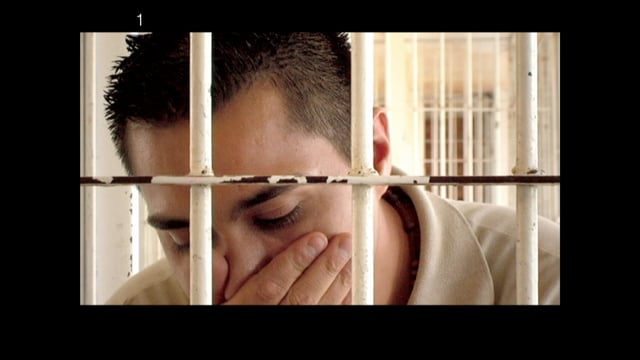
In 2009, a low-budget documentary film called Presumed Guilty was released in movie theaters across Mexico. The film tells the story of Toño Zúñiga, a man who was wrongfully convicted of murder in Mexico City. Through documenting his life in prison and his legal struggles to regain his freedom, the film made a compelling case for criminal justice reform in Mexico and challenged dominant policy narratives. The film’s impact was unexpectedly explosive. Its depiction of Mexico’s court system was so realistic and embarrassing that a federal judge issued a ban. In response to the censorship, the film was uploaded to YouTube and pirated DVD copies flooded the streets. Today, Presumed Guilty remains the most successful documentary in Mexican history. According to polls, one in every three Mexicans has seen the film. Layda Negrete and Roberto Hernández, the filmmakers, will discuss their experience making Presumed Guilty and explain how the film helped catalyze national judicial reforms in Mexico. Roberto Hernández (Director/Producer) was trained as a lawyer in Mexico and Canada and had no particular interest in cameras or film until he found himself collecting statistics in the basement of Mexico City's Superior Court, which houses the archived legal cases of one of the largest cities in the world. What he saw inspired him and his wife, Layda Negrete, to make "El Túnel," a short documentary that presented scandalous facts about Mexico's justice system and was broadcast on several television stations throughout Mexico. As a result of the support the film received, in 2008 Mexico's Congress passed the most significant amendment to its constitution's due process clause, requiring public trials and the presumption of innocence. But Hernández, currently a graduate student in public policy at the University of California, Berkeley, notes, "The implementation of this reform is hardly progressing at all, as the Mexican government today remains ostensibly focused on an offensive against drug cartels."
Collaborations for Cause
30:09
Poulomi Basu Postmodernism in Photography and Transmedia Activism | Collaborations for Cause 2017
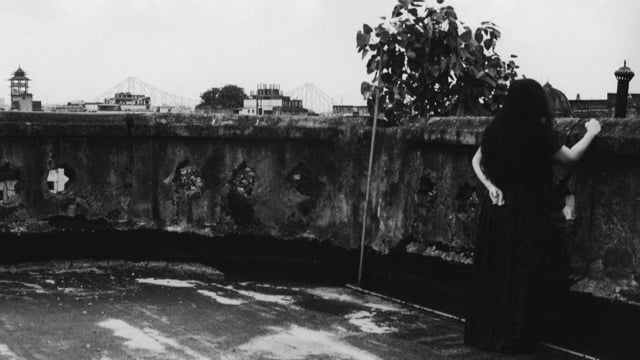
Poulomi Basu's body of work, A Ritual of Exile, investigates the causes and the consequences of normalized violence against women in Nepal. Perpetrated under the guise of Hindu tradition, the root cause of this violence is the belief in the impurity of a women’s menstrual blood. Hidden, under-reported and unresolved, these women are untouchable and, as a result, this violence takes the form of ‘exiles,” a way to keep menstruation shrouded in mystery and taboo, a weapon to shame women into subservience. In a world that is ravaged by war, the media is often full of images of those affected by conflict but, for many, the conflict begins at home. This multidisciplinary project, combining still photography and virtual reality films, is designed to reach multiple audiences across different platforms, including print, virtual and physical installations. "I want to turn my audience into activists and crack open the veil of silence and shame around women whose lives are shattered by such gender based violence," Basu says. A Ritual of Exile reveals how the chaupadi ritual disrupts the lives of girls, exposes them to recurring danger and imposes unjust restrictions on women throughout their lives. Poulomi Basu is a storyteller, artist and activist. Her name sounds like ‘follow me’ with a ‘P’. She was raised by her mother in Calcutta, India and found early inspiration in the city’s rich cinematic history. After her father’s sudden death when Poulomi was 17, her mother told her to leave home, to follow her dreams and live a life of breadth and choices that was denied to her. Since then, Poulomi prefers the path less trodden. She has slept in the wilderness under a cloudless sky staring at a million stars in search of a guerrilla army whose story strikes right at the very heart of modern India’s global ambitions, through to divided families eking out an Alaskan existence on the last rocky outpost of American soil. Time and again, she has found herself amongst ordinary people who quietly challenge the prevailing orthodoxies of the world in which they live: rural women in armed conflict, a mother's pain for a son lost to ISIS, to the wonder of a near blind child reaching for the light. Poulomi is forever in awe of the resilience shown by those in extraordinary circumstance, by those who are bent but not broken. Poulomi’s work has become known for documenting the role of women in isolated communities and conflict zones and more generally for advocating for the rights of women. In December 2015, she shared a platform with the parents of the Nirbhaya Delhi rape victim talking about her social activist initiative, The Rape in India Project. And, in January 2016 at the UN Young Changemakers Conclave, Poulomi spoke on the social impact of sustainable development with specific reference to her long-term project A Ritual of Exile and her collaboration with NGO Water Aid and their To Be A Girl campaign, which raised £2 million, using this material. Poulomi was featured alongside Hilary Clinton as one of the one of the 'Amazing women from around the world giving their best advice' by Refinery29. Poulomi was part of the VII Mentor Program. She is based between New Delhi and London. She has covered issues across Asia, Europe and America. She is co-founder and director of Just Another Photo Festival, a festival that democratizes photography by taking photography to the people and forging new audiences. Poulomi has also undertaken the 'Reporting in Crisis Zones' hostile management training at Columbia School of Journalism, kindly supported with a bursary from the Rory Peck Trust.
Collaborations for Cause
54:38
Annie Griffiths – If You Want to Go Far, Go Together | Collaborations for Cause 2017
In the changing climate of editorial publishing, photographers are learning that, if you want to go far, go together. Friendship, collaboration and collective resolve can motivate action on both editorial and business issues. One of the first women photographers to work for National Geographic, Annie Griffiths has photographed in nearly 150 countries during her illustrious career. She has worked on dozens of magazine and book projects for the Society, including stories on Lawrence of Arabia, Baja California, Galilee, Petra, Sydney, New Zealand, and Jerusalem. In addition to her magazine work, Annie is deeply committed to photographing for aid organizations around the world. She is the Executive Director of Ripple Effect Images, a collective of photographers who document the programs that are empowering women and girls throughout the developing world, especially as they deal with the devastating effects of climate change. Annie is known for her warmth, and for her ability to quickly create photographs that humanize various situations and cultures. Annie’s work has also appeared in LIFE, Geo, Smithsonian, Fortune, Merian, Stern, and many other publications. With author Barbara Kingsolver, she produced Last Stand: America’s Virgin Lands, a book celebrating the last pristine wilderness in North America. Proceeds from the book have raised more than a quarter of a million dollars for grassroots land conservation. In 2008. Annie published A Camera, Two Kids and a Camel, a photo memoir about balance, and the joy of creating a meaningful life. In 2010, she published Simply Beautiful Photographs, which was named the top photo/art book of the year by Amazon and by Barnes and Noble. Annie is currently at work on three new books. Annie has received awards from the National Press Photographers Association, the Associated Press, the National Organization of Women, The University of Minnesota and the White House News Photographers Association.
Collaborations for Cause
35:02
Collaborations for Cause 2017 Panel
Collaborations for Cause
30:18
Bryan Monroe – Why What We Do Still Matters? Hint: We're Not There Yet | Collaborations for Cause 2017
Bryan Monroe is the Verizon Chair and professor at Temple University’s School of Media and Communication (SMC). Before joining Temple, he was most recently the Washington editor, Opinion & Commentary at CNN and editor of CNNPolitics.com. His work at that network included editorial planning and content strategy across all online platforms for CNN in its Washington, D.C., bureau. He also served as the assistant vice president of news at Knight Ridder Newspapers, where he helped lead journalists at the Biloxi Sun Herald to the 2006 Pulitzer Prize Gold Medal for Public Service for their coverage of Hurricane Katrina. Monroe was also vice president and editorial director at EBONY and Jet magazines, where he led coverage of the 2008 presidential election, conducted the first post-election interview with President Barack Obama and did the last interview with pop legend Michael Jackson before his death. Monroe was a Nieman Fellow at Harvard University and served as a visiting professor at Northwestern University’s Medill School of Journalism. He was president of the National Association of Black Journalists from 2005 to 2007.
Collaborations for Cause
31:39
World Vision – Content Is Not King | Collaborations for Cause 2017
The role of content and image in fulfilling storytelling, marketing and editorial needs at World Vision US. Tom Costanza spent the sixteen years as television news photographer at stations from Scranton to Seattle covering everything from presidential inaugurations and shuttle launches to earthquakes, hurricanes, and house fires. TV news helped him develop resourcefulness, compassion, and solid storytelling skills. When the opportunity to work at World Vision presented itself, Tom was able to use storytelling for a cause. Since joining World Vision in July 2001, Tom has spent a good part of the last sixteen years on the road capturing stories, spending three weeks traveling around the world to cover the Asia tsunami and in 2010, the earthquake in Haiti. He’s reported on child soldiers in Uganda, street children in Mexico, AIDS in India, and hunger in the Horn of Africa. Fortunately, the many heart-rending moments have been balanced by witnessing the joy, faith, and resilience of the world’s extraordinary people, his camera reflecting their light in some of the world’s darkest places. Phil Manzano is the director of Content Development in the Brand & Campaigns division of World Vision US. Currently, he oversees a team of writers and photographers, publications and promotional content. Prior to World Vision, he worked at The Oregonian in Portland, Ore. for more than 25 years as a writer and editor. He lives in the Rainier Valley area of South Seattle, and, on sunny days, can be found biking along Lake Washington. For almost 30 years, Jon Warren has dedicated his life to helping the poor to be seen and heard. He has traveled to upward of 60 countries producing photographs for many global publications and organizations such as World Vision. As Photojournalism Manager for World Vision, Jon travels the globe to tell the story of the charity’s work to build a better world for children. He’s photographed everything from the Haiti earthquake to the famine in Somalia. He lived with a Kenyan family trying to survive on food rations and spent a month with children in Cambodia working in a garbage dump. Through it all, his goal is to go beyond the statistics of poverty to show his subjects as individual and worthwhile human beings, loved and treasured by God. Jon has won awards from the National Press Photographers Association Pictures of the Year, Communications Arts, Folio, Maggie Awards, the Society of Professional Journalists, and Magnum Opus.
Collaborations for Cause
See more ▾
Eddie Adams Workshop
Collection · Related
5:10
Laura Roumanos on Education Through Photography
At the 2019 Eddie Adams Workshop, Photoville co-founder Laura Roumanos discusses the ways that photography can be an important component of curriculum, and how she has worked to incorporate photography based educational content into the programming of her organization. Originally hailing from Sydney, Australia — where she graduated from the prestigious National Institute of Dramatic Arts— Laura Roumanos worked as a Producer and Arts Administrator before making the big move to NYC, to join the Manhattan Theatre Club. She then headed over to St. Ann’s Warehouse where she was the General Manager for several years, producing and presenting large scale international theatre, music and art events. Laura is currently the executive producer and co-founder of United Photo Industries and Photoville where she has produced over 300 photo exhibitions and public projects throughout the world including Hamburg, Tokyo, Lodz, Sydney and Shanghai, and has brokered partnerships with over 100 entities including National Geographic, Instagram, TIME Magazine, The Pulitzer Center, NYC Parks and NYC Department of Transport to name a few. UPI recently has been working with the United Nations and produced and curated 17 large scale exhibitions at the World Humanitarian Summit in Istanbul and is working on a long-term global project on Migration to be completed in 2019.While spearheading UPI, Laura also recently served as the Senior Producer for the Future of Story Telling Festival in New York City and has in the last 6 years worked at various wonderful non-profit institutions such as Creative Time as their Senior Producer and has been Moonlighting as the Line Producer and Director of Operations for the World Science Festival on a freelance basis. Laura also continues to consult, manage, and produce numerous theatrical shows and events throughout New York City, including highlights such as producing Karen O’s new Psycho Opera for The Creators Project and VICE Media in 2011 at St. Ann’s Warehouse, and a subsequent tour to the Sydney Opera House. Laura also recently produced the Opening Ceremony Spring Fashion Show play written by Spike Jonze & Jonah Hill and Directed by Jonze at The Metropolitan Opera and Bryce Dessner’s & the Brooklyn Youth Chorus’ Black Mountain Songs at the Brooklyn Academy of Music (BAM) and toured internationally. Laura Roumanos has built a reputation in the New York Arts scene as someone to go to for consultation and advice regarding public art and multi-disciplinary projects across all mediums. The Eddie Adams Workshop is the only tuition-free photojournalism seminar of its kind. One hundred participants selected solely on the merit of their pictures team up with top professional photographers and editors for a four-day gathering that includes assignments, portfolio reviews, panel discussions and presentations. The Workshop began in 1988 with the goal to redress the exclusivity of professional opportunities by accepting students based on their demonstrated skills, and not on their ability to pay tuition. The all-volunteer faculty and staff, many of whom are alumni, are passionate about the mission and donate their time and expertise. The Workshop has an unparalleled history of nurturing talent, exchanging ideas and building relationships.
Eddie Adams Workshop
35:00
Marco Grob - EAW Archives
Eddie Adams Workshop
39:13
Al Bello - EAW Archives
Eddie Adams Workshop
1:15:53
Visualizing the Climate Crisis Representing Ocean Acidification
In the visualization of the climate crisis, how can ocean acidification be represented? Ocean acidification is a change to the ocean’s chemistry produced by rising levels of carbon dioxide (CO2). The ocean absorbs about 30 percent of the CO2 that human activity releases into the atmosphere, and as levels of atmospheric CO2 increase, so do the levels in the ocean. When CO2 is absorbed by seawater, a series of chemical reactions occur that damage structures such as sea shells and coral skeletons. This harms calcifying organisms such as oysters, clams, sea urchins, shallow-water corals, deep-sea corals, and calcareous plankton. When these organisms are at risk, the entire food web may also be at risk. How can this phenomenon be visualized? How can visual storytellers work with scientists and develop a narrative that shows the problem and points the way toward solutions? What messages can have a tangible impact on a local and global level? How can we communicate the connection between issues in the Atlantic Ocean, the corals in the Philippines? and life and habits in Europe? To address these issues, Katherine Jack (photographer) and Octavio Aburto (research scientist) will be in conversation with Maria Teresa Salvati (founder and director of Everything is Connected). The talk will be moderated by Paul Lowe (Reader in Documentary Photography at UAL, London). This event is the first in a new series, Visualizing the Climate Crisis, which explores the potential and the role that contemporary photography, together with different disciplines, can have in addressing the multi-layered theme of climate change. The series will feature visual journalists doing evidence-based, research-informed, image-led reporting on climate issues. They will be in conversation with other professionals representing a diverse range of disciplines, such as science, policy-making, education, architecture, social innovation, media, and more. The starting point for each event is a specific topic for which two professionals will explore the possibility of thinking beyond photography in a genuinely trans-disciplinary approach to expand reach, involve the wider public, and move people from being inspired to taking action. This series is organized by Everything is Connected, UAL, University of the Arts London, and VII Insider.
Eddie Adams Workshop
Legal
Privacy Policy
/
Terms of Use
Home
✕
✕
All
Resource Center
✕
✕
✕